
TLDR
Every licensed Liverpool HMO needs a satisfactory EICR every five years as the statutory minimum, with most HMO licence schedules also requiring annual visual checks of the electrics and a coordinated fire alarm test. Penalties run to £30,000 per breach and Liverpool City Council can shorten the cycle as a licence condition, so check your individual schedule rather than working from the headline rule.
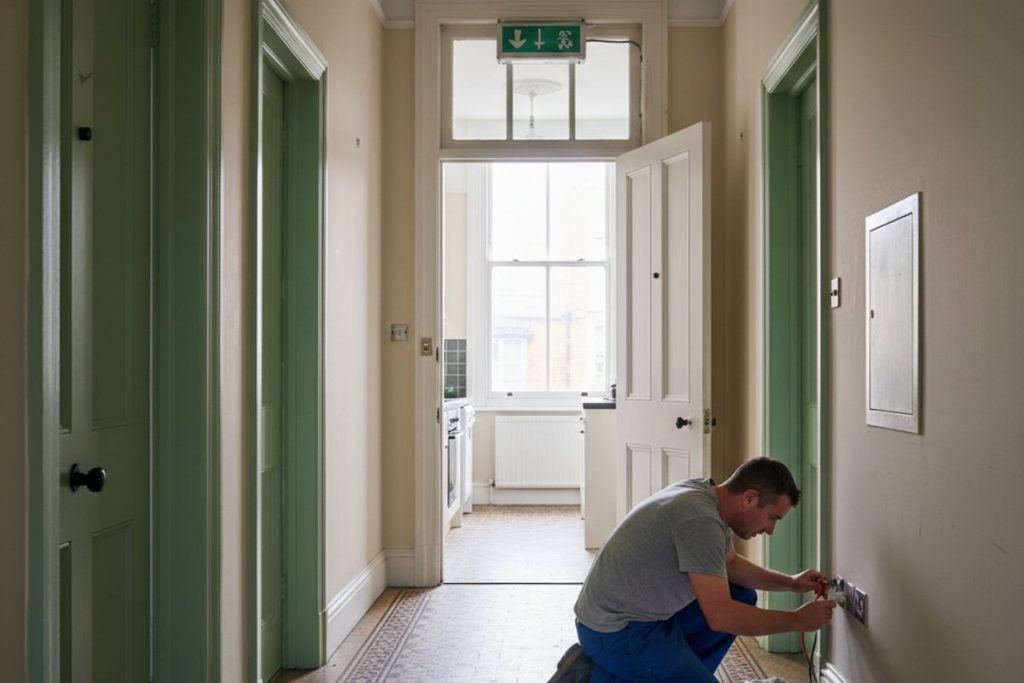
This guide covers the licensing crossover that catches HMO landlords out, what inspectors actually check that’s specific to HMOs, and how to schedule the work around in-situ tenants. About a 7 minute read.
An HMO is anything that’s let to three or more people from more than one household sharing kitchen, bathroom or toilet facilities. Once you cross the threshold of five occupants forming more than one household, you also need a Mandatory HMO Licence. In Liverpool the additional licensing regime catches plenty of smaller HMOs (3-4 occupants), so the licence threshold sits lower than in most cities.
This matters for the EICR because the inspection requirement isn’t just the 2020 PRS Regulations any more. It’s the 2020 Regs plus your specific licence schedule, and the licence often tightens the rules. The general regulatory framework that sits behind both is covered in our Liverpool landlord EICR guide.
The two licensing regimes that affect HMO EICRs
Liverpool HMOs sit under one or both of these regimes:
- Mandatory HMO Licensing. Compulsory for any HMO with five or more occupants forming more than one household, regardless of building size. Set by national legislation; enforced by Liverpool City Council. Carries minimum room sizes, fire safety conditions, and electrical safety conditions written into the licence.
- Additional HMO Licensing. A Liverpool-specific extension that captures smaller HMOs (3-4 occupants) in designated zones. The conditions are similar to mandatory but the threshold is lower. Liverpool’s additional scheme has been in force across most central wards for several cycles.
- Selective Licensing. Covers single-family lets in designated zones. Doesn’t apply to HMOs as such, but if you also let single-family properties in Anfield, Everton, Kensington, Picton, Princes Park, Tuebrook, Stoneycroft or Wavertree, the same EICR baseline applies and you’ll receive a single audit covering both books.
Every Liverpool HMO licence we’ve seen specifies an electrical condition report cycle. Some say “every five years”; some say “every five years or sooner if recommended by the inspecting electrician”; a few specify three-year cycles for higher-risk converted properties. Read your licence schedule rather than working from the national headline.
EICR frequency for Liverpool HMOs
The statutory floor for an HMO under the 2020 PRS Regulations is the same as any private rented property: a satisfactory Electrical Installation Condition Report dated within the last five years. The Mandatory HMO Licence and most Additional Licence schedules then add a layer:
- Five-year periodic EICR. The legal minimum.
- Annual visual inspection. Often a written condition of the licence. Doesn’t have to be a full EICR but should be a documented walk-through of the installation: visible cable damage, RCD test, board condition, accessible socket condition.
- Six-monthly fire alarm service. Not part of the EICR but typically scheduled together because the same engineer can do both visits.
- Inspection on change of HMO occupancy structure. If you reconfigure rooms (a six-bed becomes a seven-bed, a kitchen is added on a new floor) the licence usually requires a fresh EICR before re-letting.
The annual visual is where most HMO landlords fall short, because it’s not obviously a “report” in the EICR sense and there’s no statutory form for it. We issue a one-page condition note for each visit so you have a paper trail to show the council if asked.
What HMO inspectors actually check
An HMO EICR is not the same job as a single-let EICR. The points the inspector covers are wider, the testing schedule is longer, and several specific HMO failure points have to be ticked off. The most common HMO-specific items:
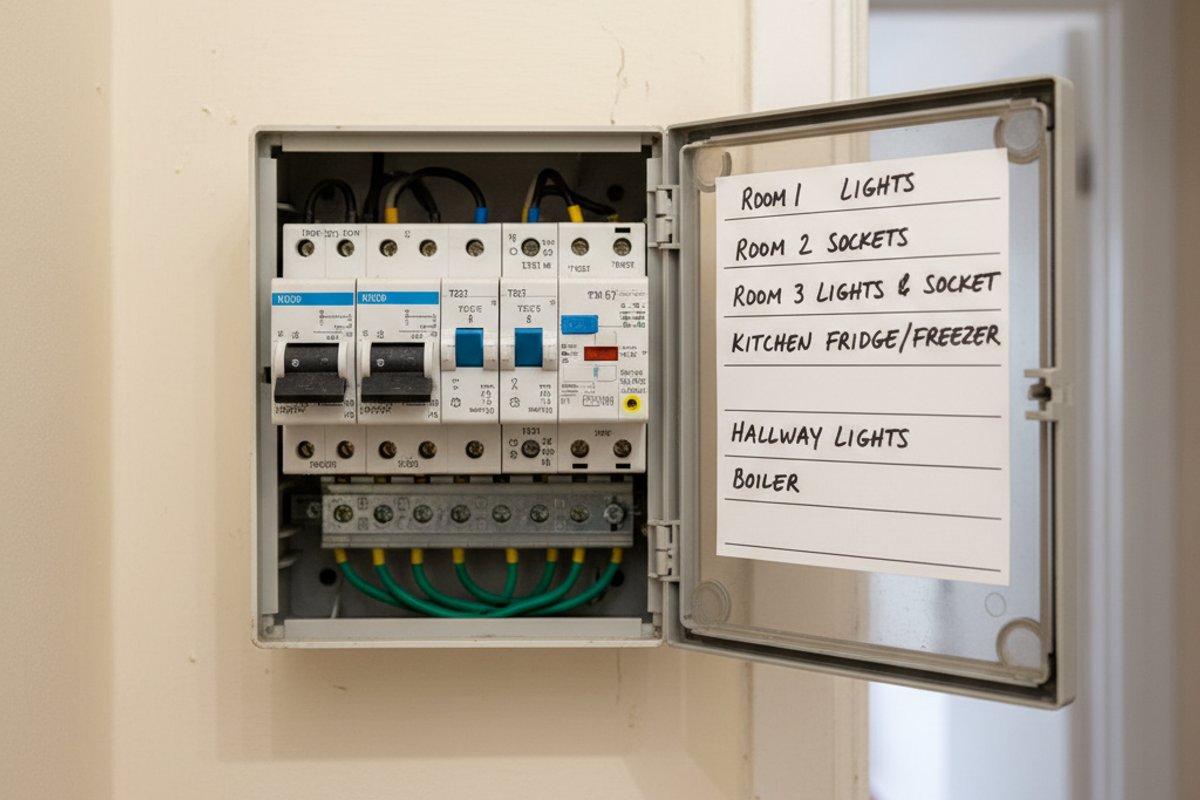
- Escape route circuits. Lighting on the stairs, landing and corridor must be on a circuit that doesn’t share an RCD with a kitchen socket, so a kitchen fault doesn’t kill the escape lighting. Common C2 in older terraces converted to HMO without a board upgrade.
- Per-room sub-circuits and individual RCBO protection. Modern HMO best practice is each bedroom on its own RCBO, so a fault in one room doesn’t trip the rest. Often picked up as a C3 on older boards.
- Shared kitchen circuits. Number of socket outlets relative to occupancy, RCD protection on every appliance circuit, separate dedicated cooker circuit, and an isolator at high level that the tenant can reach.
- Bathroom zones. Zoning for showers and basins is the same as a single-let but more often missed in HMO conversions because the bathrooms are small. Pull-cord switches outside the bathroom door are a common retrofit.
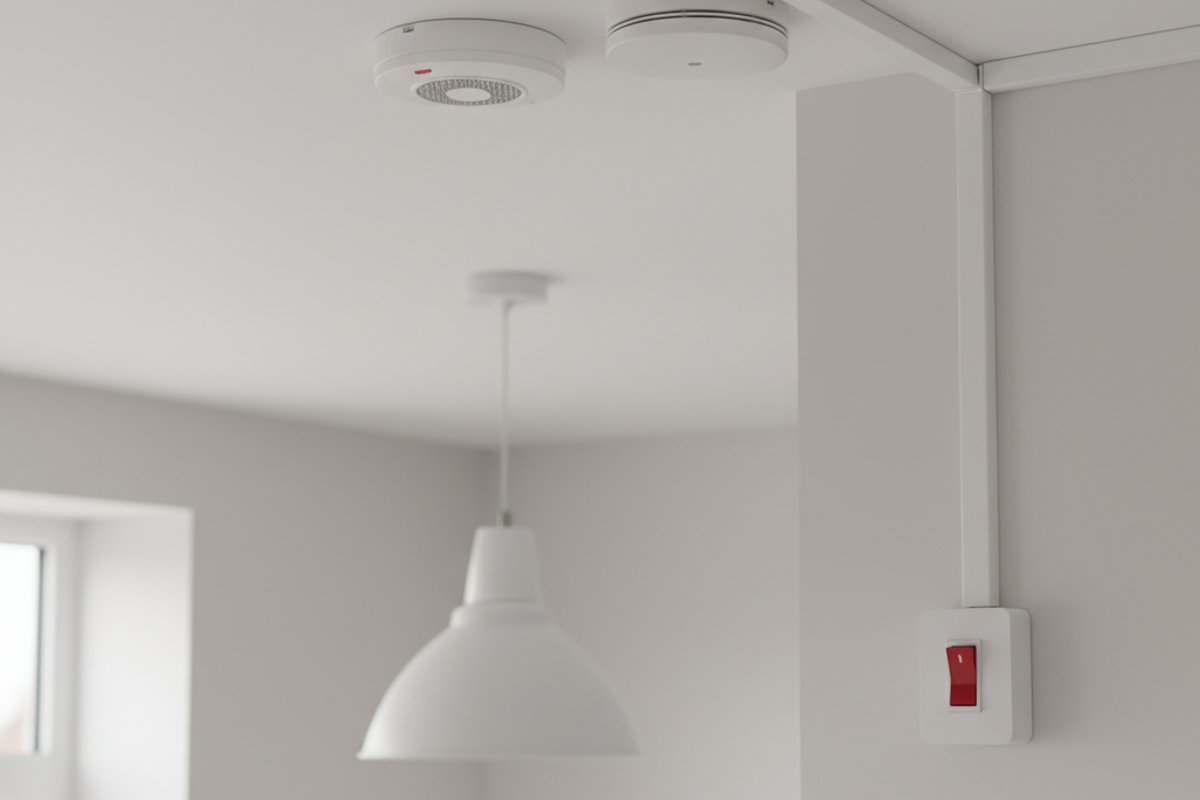
- Smoke alarm interconnect. Required in HMOs to BS 5839-6 Grade A or D depending on size. The EICR doesn’t certify the fire alarm itself but it does check the wiring is fed from the right circuit and that an isolator is fitted.
- Earth bonding to multiple metallic services. HMOs often have a single gas meter cupboard but several extractor fans, water heaters and possibly a shared boiler, all of which need verified bonding.
If your last EICR was a single-let-style two-hour walk-through, it probably didn’t cover all of the above. An HMO inspection on a five-bed conversion takes us four to six hours including the test schedule.
EICR plus fire alarm plus selective licensing
The three regimes overlap on every HMO visit. Done properly, one engineer covers all three in a single trip:
- EICR to BS 7671 with the HMO-specific items above
- Fire alarm service to BS 5839-6 (six-monthly minimum, supplied as a separate certificate)
- Annual condition note for the HMO or selective licence file
- Updated emergency lighting check if BS 5266 emergency lighting is fitted to the escape route (most three-storey-plus HMOs)
Coordinating the three saves at least two visits a year and avoids the situation where one contractor ticks off the fire alarm but flags an EICR-relevant defect that doesn’t get reported through. Our electrical certificates page lists every certificate type we issue so you can see what comes back in the handover pack.
Penalties and the audit timeline
Non-compliance penalties are scaled the same as the single-let regime: up to £30,000 per breach. The difference for an HMO is volume. A six-bed HMO with no current EICR on five circuits and no fire alarm service certificate is several breaches in one inspection, not one. Liverpool City Council issues civil penalty notices directly under the licensing schedule and has done so in the city in recent years.
Council audit windows on HMOs are tighter than the seven-day window for single-let selective licensing. A Mandatory HMO licence holder is generally required to produce the certificate inside 7 days of any council request, and the council can attend the property without notice as part of a licence audit. We email the certificate as a PDF on the day of issue so you can forward it without delay.
What you get on a Maximec HMO inspection visit
- EICR scoped for HMOs. Per-room circuit testing, escape route lighting check, shared kitchen and bathroom zoning, earth bonding verification.
- Fire alarm service to BS 5839-6. Booked at the same visit, separate certificate, full event log retained.
- Annual condition note. One-page summary suitable for filing with the HMO or selective licence schedule.
- Tenant access management. Written notices to all bedrooms, scheduled around shared bathroom and kitchen access.
- Same-day PDF. Certificate emailed as soon as the report is signed off, ready for the council inbox if a request lands.
Working around in-situ tenants and shared spaces
Most Liverpool HMOs we test have students, young professionals or shift workers in residence. Co-ordinating five separate diaries and two shared rooms takes more planning than a single-let visit. The pattern that works:
- Block written notice. 14-day written notice to all tenants explaining the inspection and the access window. We supply a template.
- One-day inspection. Whole-property in a single visit rather than spread over several days, so tenants are inconvenienced once.
- Power off, three windows. We schedule three short power-off windows of 20-30 minutes each, around the most common shared-meal times, rather than one long isolation that catches everyone.
- Bedroom access by appointment. Tenants confirm their bedroom slot through the landlord. If a tenant doesn’t respond, the bedroom socket is recorded as not tested and the inspector notes the reason on the report.
Where tenant turnover is high, the void-period EICR is often the cleanest option. A vacated room can be deep-tested without coordinating with anyone and any remedial work can run on the same day. We’re often booked at HMO turnover specifically for this reason in Edge Hill, Wavertree and Toxteth.
Frequently Asked Questions
How often does a Liverpool HMO need an EICR?
Five years is the statutory minimum under the 2020 PRS Regulations, and most Liverpool HMO licence schedules add an annual visual inspection between full EICRs. Some higher-risk conversions sit on three-year cycles as a licence condition, so check your individual licence schedule rather than working from the national headline.
Is a single-let EICR enough for an HMO licence?
Almost never. HMO inspections need to cover escape route circuits, shared kitchen and bathroom zoning, per-room circuit identification and bonding to multiple metallic services. A two-hour single-let walk-through misses several of those. Insist on an HMO-scoped report.
How long does an HMO EICR take?
Four to six hours for a five-bed converted Victorian terrace, longer for purpose-built or larger properties. The job is faster in the void period than with tenants in residence because access to all bedrooms is immediate and isolation can run continuously rather than in 30-minute windows.
Do I need separate fire alarm and EICR certificates for my HMO?
Yes. The EICR covers the wiring; the fire alarm certificate covers the BS 5839-6 system itself, including detector function, sounder coverage and battery condition. Both are usually scheduled at the same visit but they’re issued as two separate certificates.
What’s the penalty for an out-of-date HMO EICR?
Up to £30,000 per breach. Liverpool City Council issues civil penalty notices directly under the HMO licence and can attend the property without notice as part of a licensing audit. The certificate must be supplied to the council within 7 days of any written request.
What if I reconfigure rooms in my HMO?
Most Liverpool HMO licences require a fresh EICR before re-letting if you change the occupancy structure, for example converting a six-bed to a seven-bed or adding a kitchenette on a new floor. The certificate also needs reissuing if you change the consumer unit or add new circuits.
Related Services
HMO licence audit due?
Book an HMO-scoped EICR with the fire alarm service in the same visit. Same-day PDF, one set of tenant notices, one engineer.
NICEIC-registered with Platinum Promise cover. Based in Rainhill; covering Liverpool and the North West. Call 0151 792 3243 or request a free no-obligation quote.