

TLDR
An EICR uses four codes. C1 is danger present, isolated on the day. C2 is potentially dangerous, urgent fix required. C3 is improvement recommended, doesn’t fail the report. FI is further investigation required, also fails the report. Any C1, C2 or FI makes the report unsatisfactory and starts a 28 day remedial clock under the 2020 PRS Regulations.
This guide gives you plain-English examples of each code, the threshold that flips a report from satisfactory to unsatisfactory, and how to challenge a code you think is wrong. About a 7 minute read.
You’ve just had your EICR back and there’s a column of letters and numbers next to circuits you didn’t know you had. The summary at the bottom says “unsatisfactory” and the contractor wants £400 to put it right. Before you sign anything, read the codes.
EICR codes are defined by Electrical Safety First’s Best Practice Guide 4 and adopted across the trade. They mean the same thing whether your inspector is from a Liverpool firm or a national chain. The differences are usually in how strictly each code is applied, which is where landlords and homeowners get tripped up.
The four EICR codes at a glance
- C1, danger present. Live risk of injury. Isolated on the day. Fails the report.
- C2, potentially dangerous. Urgent remedial action required. Fails the report.
- C3, improvement recommended. Below current standards but still safe. Does NOT fail the report.
- FI, further investigation required. Symptom found, cause not yet traced. Fails the report until the FI is closed out.
A satisfactory Electrical Installation Condition Report has zero C1, C2 and FI items. Any combination of those three flips it to unsatisfactory.
C1: danger present
C1 is the inspector saying someone could be hurt today. The expectation is that the affected circuit or equipment is isolated before the inspector leaves the property, and a written notification is given to the responsible person on site (the homeowner, landlord or facilities manager).
What earns a C1:
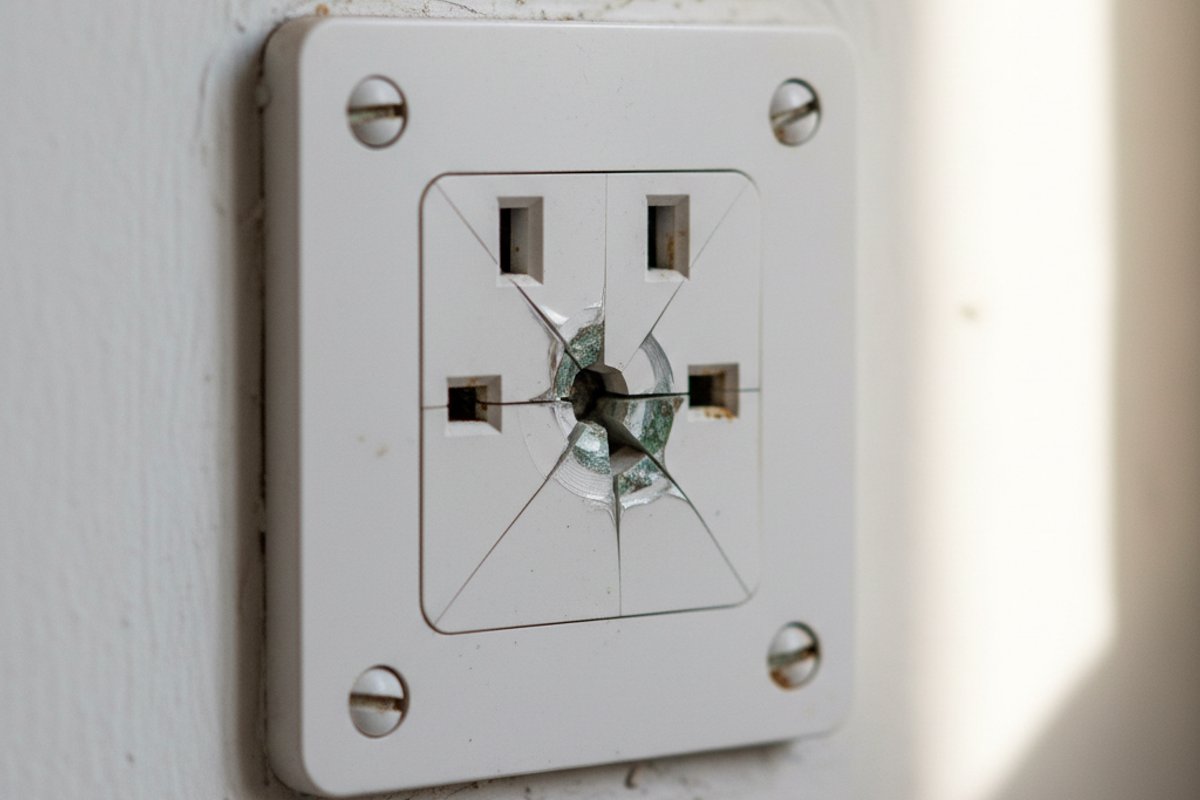
- Exposed live conductor (a broken socket faceplate with bare copper showing, a junction box without its cover)
- No earthing on a metal-clad item that should be earthed (a metal back-box on a socket, an old immersion tank)
- Damaged consumer unit with live parts accessible
- Unsafe interconnection between supplies (two consumer units cross-fed without isolation)
- Burn marks on a socket, switch or board indicating arcing
If a C1 is logged, the report itself is unsatisfactory and the 28 day remedial clock starts from the date of the inspection. In most cases the inspector will fit a temporary fix or isolate the circuit before leaving. They are not obliged to do the full repair on the day, but they will not leave a live danger.
C2: potentially dangerous
C2 is the most common code on an unsatisfactory report. The defect isn’t an immediate danger, but it could become one under fault conditions, which is why it has to be put right inside the 28 day window.
What earns a C2:
- RCD that fails its trip test (it should trip in under 40 milliseconds at five times the rated residual current)
- Insufficient earthing or main protective bonding to gas, water or oil pipework
- Damaged consumer unit cover or fitted screws missing
- Cables run through walls without protective conduit where they should be
- Old pyrotenax or rubber-insulated cable that’s still serviceable but past its design life
- No 30 mA RCD protection on a circuit that requires it under the current edition (most domestic final circuits)
If your report has multiple C2s spread across the installation, especially on different circuits, that’s often a signal the cable itself is the issue, not the fittings. We’ll discuss that under the rewire question further down.
C3: improvement recommended
C3 is the code that surprises most landlords and homeowners. The installation is safe and the report is satisfactory, but the inspector is recording that the installation doesn’t meet the current edition of BS 7671 (currently the 18th Edition Amendment 2). It would have been safe and compliant when it was installed; it’s just been overtaken by newer rules.
What earns a C3:
- A 2010-era consumer unit with no surge protection device (SPD), now recommended in the 18th Edition
- A circuit installed before RCD protection was required, still working safely
- A board where some MCBs are RCBO-protected and some are split-load RCD-protected
- A bathroom fan with no separate isolator (was acceptable, now flagged for improvement)
- Lack of AFDD protection where the current edition recommends it (HMOs, care homes)
You don’t have to act on a C3 to keep the report satisfactory. But two things are worth knowing. First, the C3 of today is often the C2 of the next edition, and BS 7671 updates roughly every five years. Second, C3 items are usually cheap to put right at the same time as a C2 fix, because the engineer is already in the board.
FI: further investigation required
FI is the inspector saying “I’ve found a symptom and I haven’t been able to trace the cause within the inspection time, so I cannot certify the installation as safe yet.” It fails the report exactly the same as a C1 or C2, but the remedial action is investigation, not direct repair.
What earns an FI:
- Unexplained insulation resistance reading low on a circuit (could be cable damage, could be a faulty appliance left plugged in)
- A circuit that doesn’t appear to have a clear test point or accessible junction
- Concealed cable run that the inspector cannot prove is to current spec
- An RCD that trips under load but passes the bench test
FI is not a fail-safe code for inspectors who don’t want to commit. A reputable engineer will raise an FI rarely, and only when investigation genuinely needs more time than the inspection allows. If your report has multiple FIs and no C1 or C2, ask the inspector to walk you through what specifically needs investigating before you accept the report.
What flips a report from satisfactory to unsatisfactory
One C1, one C2 or one FI is enough. The codes don’t accumulate to a threshold, and there’s no allowance for “minor” C2s.
The Schedule of Inspections at the back of the report records every defect against the affected circuit. The summary page on the front says “satisfactory” or “unsatisfactory” depending on whether any C1, C2 or FI is present. The two pages have to agree. If your summary says satisfactory but the schedule has a C2 against a circuit, the report is internally inconsistent and you should ask for it to be reissued.
Common codes Liverpool landlords actually see
Across the Liverpool rental stock we inspect, there’s a clear pattern. Pre-1980s terraces and semis in Toxteth, Anfield, Walton and Edge Hill come back with a recognisable spread. If you’re a landlord working through the wider compliance picture, our Liverpool landlord EICR guide walks through the regulation timelines that sit alongside these codes:
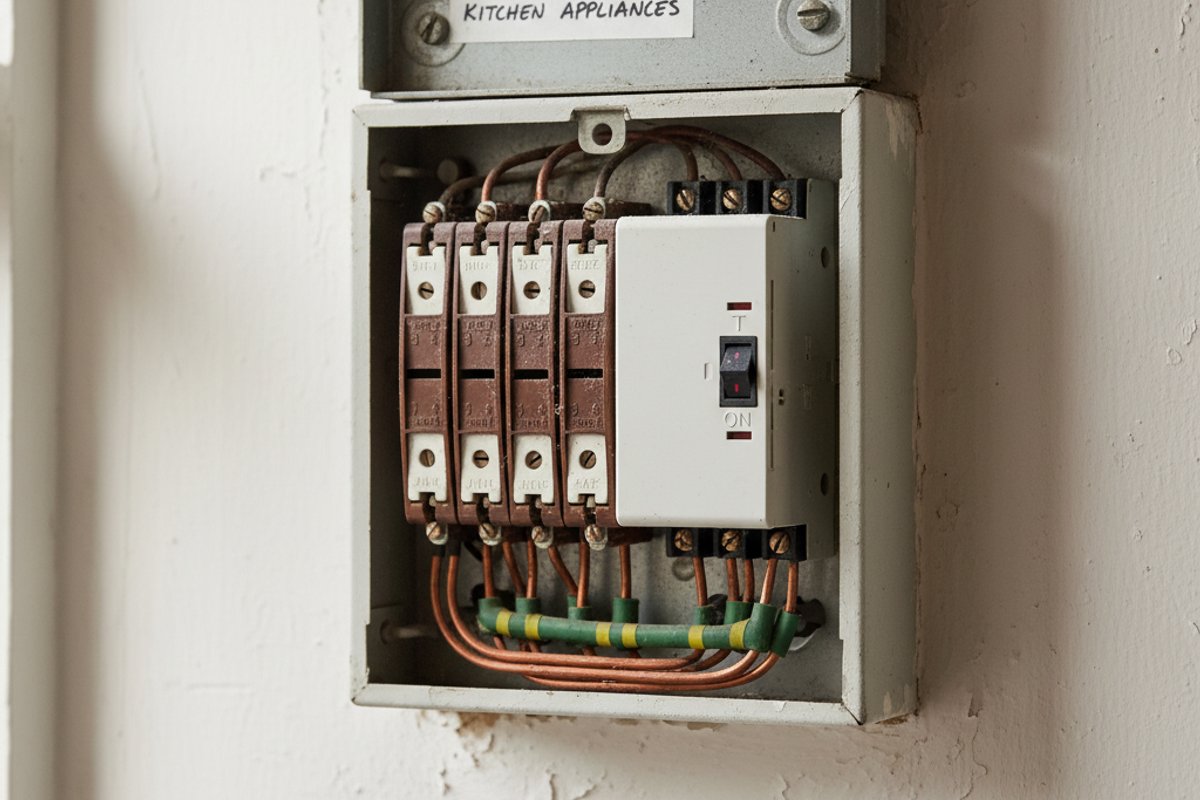
- C2 on the consumer unit. Most common single defect, usually one of: missing RCD on socket circuits, plastic-cased board pre-2016 in a domestic install, or burn marks on terminals.
- C2 on main bonding. Either undersized 4 mm earth conductor where 10 mm is now required, or missing bonding to the gas service after a meter swap by the gas company.
- C3 on lack of SPD. Surge protection wasn’t required pre-18th Edition. Most older boards don’t have it.
- C3 on lighting circuits. Two-core lighting cables (no earth) installed before the 16th Edition. Safe under fault conditions if the original earthing scheme is intact, but flagged as below current spec.
- FI on a kitchen ring. Insulation resistance dipping under load, often a degraded cable behind tile or under skirting.
If your report has all five of those, it tells the same story as the cable itself. We’d advise quoting both a remedial-only and a partial rewire, because in this scenario the partial often costs less across the next inspection cycle than the remedial does in repeat C2s. Our electrical certificates page lists every certificate type we issue if you want to see what each looks like.
What you get when Maximec runs the EICR
- Coded report against BS 7671. Every defect listed by circuit with C1, C2, C3 or FI and a one-line plain-English explanation, not just a code.
- Walk-through at handover. We sit down with the codes for ten minutes before you sign for the report, so you know what’s important and what isn’t.
- Fixed-price remedial quote. Itemised against the specific C1, C2 and FI items, with a partial-rewire alternative if the underlying cable is the issue.
- Re-test and reissue. One visit to do the remedial work and reissue the EICR as satisfactory. No second inspection fee.
- Six-year Platinum Promise. Insurance-backed cover on every job we sign off. NICEIC-registered, audited annually.
How to challenge a code you think is wrong
It’s rare, but it happens. An inspector logs a C2 you don’t agree with, or a C1 that turns out to be a misread on site. Two routes are open to you.
The first is to ask the inspector to talk you through the photograph and the test reading that supports the code. Most inspectors will. If their reasoning is solid, the code stays. If they hesitate or the supporting evidence is thin, ask them to revisit the call.
The second is a second opinion from a different competent-person-scheme registered electrician (NICEIC, NAPIT or SELECT in Scotland). A second EICR is a paid job, but if the second inspector codes the same item differently, you have a written disagreement on file and a route to dispute via the original inspector’s certifying body. In the few cases we’ve been asked for a second opinion, the original code has stood about half the time.
Don’t dispute through the contractor’s own complaints process if you suspect the original code was self-serving. Go straight to the certifying body. NICEIC, NAPIT and SELECT all run independent assessment processes and will revisit a contested report.
Frequently Asked Questions
Does a C3 fail my EICR?
No. C3 is “improvement recommended” and the report can still be marked satisfactory with multiple C3s present. Only C1, C2 and FI codes flip the report to unsatisfactory.
How long do I have to fix a C1 or C2?
28 days from the inspection date for landlords under the 2020 PRS Regulations, or sooner if the report specifies it. C1 items are typically isolated on the inspection day. Homeowners and commercial occupiers aren’t on a statutory clock but most insurers expect remediation within a similar window.
What’s the difference between a C2 and an FI?
A C2 is a confirmed defect that needs putting right. An FI is a symptom the inspector found that they couldn’t trace to a confirmed cause within the inspection. Both fail the report, but the remedial action for an FI is investigation, not direct repair.
Can I refuse to fix a C3?
Yes. C3 is improvement recommended, not required. The report stays satisfactory either way. The trade-off is that today’s C3 often becomes tomorrow’s C2 when the regulations update, and C3 items are usually cheap to address while remedial work is already happening.
My EICR has multiple C2s. Do I need a rewire?
Not always. Multiple C2s on different circuits often points at the cable rather than the fittings, in which case a partial rewire makes more sense than chasing repeat remedials. Multiple C2s on the same fitting or board is usually a fitting-replacement job. Ask for both options quoted in writing before you commit.
Can I dispute an EICR code?
Yes. Ask the original inspector to walk you through the test data behind the code. If you still disagree, get a second EICR from a different NICEIC, NAPIT or SELECT registered contractor. If they code the item differently, raise the difference with the original inspector’s certifying body.
What does the official guidance for these codes say?
The codes are defined in Electrical Safety First’s guide to condition reports, which is the consumer-facing version of Best Practice Guide 4 used across the trade. The underlying inspection method sits in BS 7671:2018 Amendment 2, the IET Wiring Regulations.
Related Services
Need a coded EICR you can actually read?
Book the inspection and you’ll get a coded report with a plain-English line against every C1, C2, C3 and FI item. Remedial work quoted as a separate fixed-price scope so you can decide before you commit.
NICEIC-registered with Platinum Promise cover. Based in Rainhill; covering Liverpool and the North West. Call 0151 792 3243 or request a free no-obligation quote.