

TLDR
If your RCD (Residual Current Device) won’t reset or keeps tripping, the most likely cause is a faulty appliance on the affected circuit. Unplug everything, reset the RCD, then reconnect appliances one at a time until it trips again, that appliance is the fault.
This post covers five checks you can safely carry out yourself, when to stop and call an emergency electrician in Liverpool, and what the 105 line is for before you touch anything. About a 5-minute read.
It is 10pm. The lights go off on one floor, the RCD switch in your consumer unit is pointing down, and when you push it back up it immediately flicks off again. Most Liverpool homes built before 2000 have a single RCD protecting half the circuits, and when it goes down, it can take sockets, lights, and the fridge freezer with it in one go.
In the majority of cases, the cause is a faulty appliance drawing too much current or leaking to earth. These five checks take around 20 minutes and cover the most common causes in order of likelihood. They are steps any householder can take safely, the line between what you can do and when to call a qualified emergency electrician in Liverpool is clearly marked below.
Step 1: Rule Out a Power Cut Before You Touch the Consumer Unit
Before opening the consumer unit, confirm whether the fault is inside your property or with the distribution network. Call 105 (the free national power cut helpline) or visit the SP Energy Networks outage map online, SP Energy Networks is the Distribution Network Operator (DNO) for Liverpool and Merseyside. If your neighbours have power and the street lights are on, the fault is inside your property. If the whole street is affected, no amount of RCD resetting will help.
A quick check before calling 105: look at your electricity meter. If it has a display and it is completely blank, there may be a problem upstream of your consumer unit entirely. This matters because the consumer unit is downstream of the meter, if the cut-out fuse at the meter has blown, that is a DNO issue and not something you can fix yourself.
Step 2: Identify Exactly Which Device Has Tripped
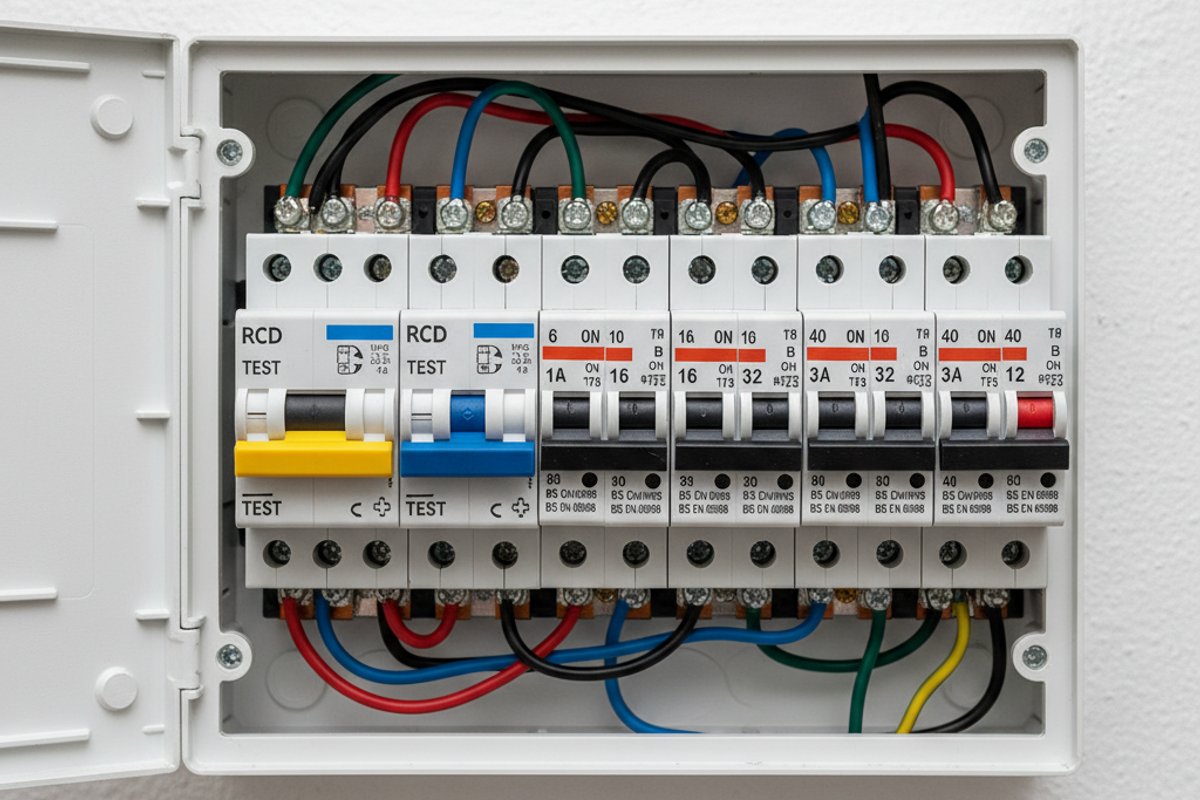
Open the consumer unit cover and look at the row of switches. You will see MCBs (Miniature Circuit Breakers) for each circuit, and at least one larger switch labelled RCD, RCCB, or similar. The tripped device will be in the middle position or pointing downward.
On a modern RCBO (Residual Current Breaker with Overcurrent protection) board, each circuit has its own combined device, the one that tripped tells you the affected circuit directly. On an older split-load board common in Liverpool pre-2000 housing stock, a single RCD covers multiple circuits. The label on the inside of the consumer unit cover (if a previous electrician was thorough) should list which circuits each section covers. Common groupings: upstairs sockets, downstairs sockets, kitchen ring main, immersion heater, cooker, lighting.
Step 3: Unplug Everything on the Affected Circuits, Then Reset
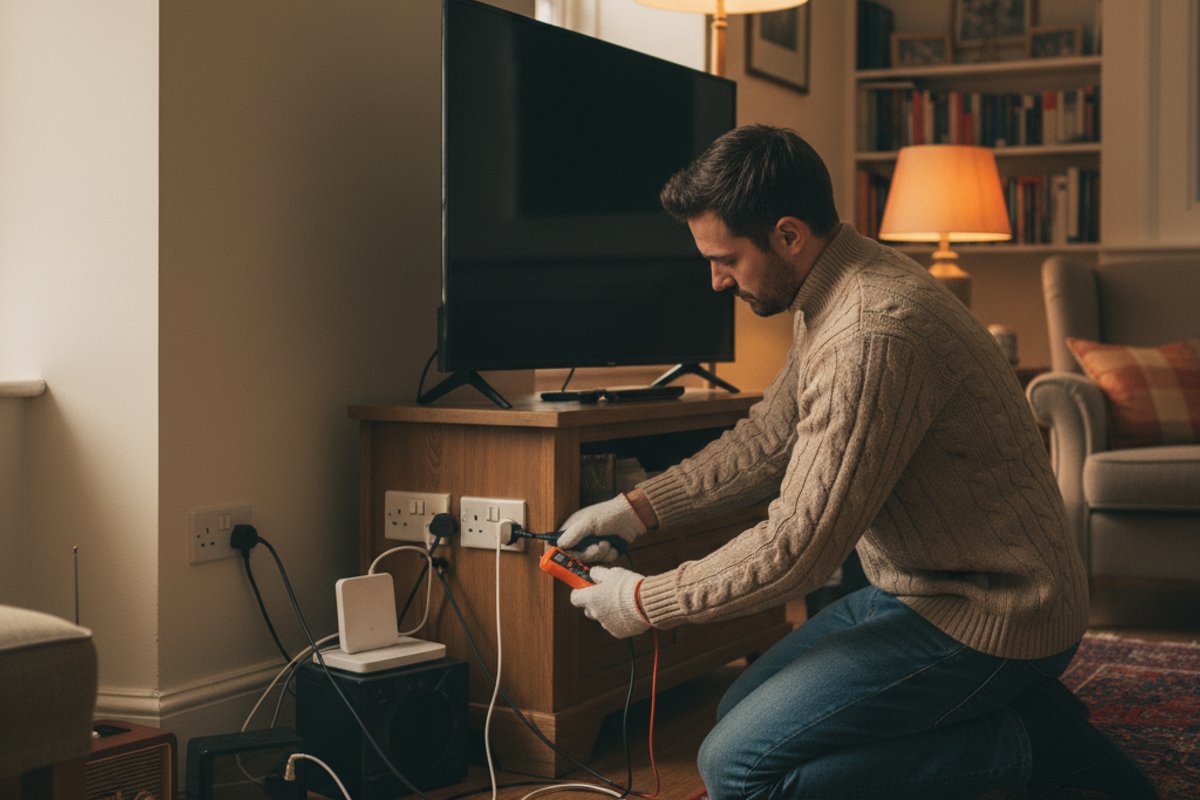
Go through every room served by the tripped circuits. Unplug every appliance, kettle, toaster, washing machine, fridge, television, phone chargers, lamps, extension leads. Switch off at the wall before unplugging. Do not leave anything connected.
Return to the consumer unit and try to reset the RCD. If it holds with everything unplugged, the problem is an appliance, not the fixed wiring, not the RCD itself. If it still trips with everything disconnected, move to step 5. Also check for damp: moisture in a socket, light fitting, or junction box above a recent leak can cause an earth fault that looks exactly like an appliance fault. If you have had a roof leak, burst pipe, or plumbing work above the affected area recently, that is a priority suspect.
According to the Electrical Safety First guidance on consumer units, RCD trips are one of the most common electrical faults in UK homes and are most often caused by faulty or ageing appliances rather than wiring faults. Starting with appliances before calling an electrician is always the right first step.
Step 4: Reconnect Appliances One at a Time
With the RCD holding, plug your appliances back in one at a time. Switch each one on at the wall and wait a few seconds before moving to the next. When the RCD trips again, the last appliance you connected is the faulty one.
Common culprits in Liverpool homes: washing machines with a failed heating element, dishwashers where a leaking seal has caused damp ingress to the motor, electric showers with a cracked heating coil, older fridges with worn motor insulation, and extension leads where a staple or screw through the cable (common in older terraces where cables were run under floor coverings) has caused an insulation fault.
Once you have identified the faulty appliance, do not simply leave it unplugged and forgotten. A fault serious enough to trip a 30mA RCD is serious enough to discard the appliance or have it tested by a qualified electrician before it is used again. For tenanted Liverpool properties in areas like Toxteth and Kensington, the landlord has a duty to address the fault promptly if the appliance is within the landlord’s supply.
Step 5: If Nothing Clears It, the RCD or Wiring May Be the Fault
If the RCD trips with every appliance unplugged, the fault is in the fixed wiring or the RCD device itself. RCDs have a mechanical service life. Older split-load boards with a single RCD protecting half the property are common in pre-2000 Liverpool housing stock, and a device that is 20 or more years old may simply have reached the end of its working life.
A failing RCD often trips spontaneously with nothing connected, or holds for a few minutes before tripping again. Fixed wiring faults, a damaged cable inside a wall, damp ingress into a ceiling rose or junction box, behave similarly. Diagnosing these requires a multifunction tester (MFT) and a Part P-registered electrician. This is not a DIY repair. Consumer unit work is notifiable under Part P of the Building Regulations and must be carried out and certified by a registered contractor.
If your consumer unit is more than 20 years old and fitted in a plastic enclosure, an RCD replacement alone may not be the right call. A new metal-clad consumer unit with individual RCBOs per circuit gives each circuit its own earth-leakage and overcurrent protection, so a trip on the kitchen circuit does not cut the upstairs lights at the same time. That conversation is worth having while the emergency fault services engineer is on site.

When to Stop Immediately and Call an Electrician
Stop at any step and call a qualified electrician immediately if: the consumer unit is warm to the touch, there is a burning smell from the board or any socket, there is visible scorching or blackening on the consumer unit or a socket, or the RCD will not hold even for a second with all circuits isolated.
Maxim Electrical Contractors covers 24/7 emergency callouts across Liverpool, Knowsley, Sefton, St Helens, and the wider North West. NICEIC-registered and covered by the Platinum Promise, which means any remedial work is protected for up to six years. Call 0151 792 3243.
What you get
- Same-day emergency response, covering Liverpool, Knowsley, Sefton, St Helens, Widnes, Warrington, and the wider North West.
- Fault diagnosis to the circuit and cause, not just a reset and a wave goodbye. We use a multifunction tester to pinpoint the fault.
- Safe isolation, the affected circuit is isolated safely before any diagnostic or repair work starts.
- Written certification on completion, a Minor Electrical Installation Works Certificate (MEIWC) or Electrical Installation Certificate (EIC) issued for any remedial work carried out.
- NICEIC Platinum Promise, six-year protection on all work completed, backed by NICEIC’s consumer guarantee.
Related Services
If you have worked through these five steps and the RCD still will not hold, the fault is beyond what you can safely diagnose without test equipment. A persistent trip with all appliances removed means the problem is in the wiring or the device itself, both require an NICEIC-registered electrician with the correct tools and the authorisation to issue the completion certificate.
Power out? Call now.
Maxim Electrical Contractors is available 24/7 for emergency callouts across Liverpool and the North West. We will diagnose the fault, isolate the circuit safely, and carry out any remedial work with the correct NICEIC certification on completion.
NICEIC-registered and covered by the NICEIC Platinum Promise. Based in Rainhill; covering Liverpool and the North West. Or request a free no-obligation callback.
Frequently Asked Questions
Why does my RCD keep tripping even when nothing is plugged in?
If the RCD trips with all appliances unplugged, the fault is in the fixed wiring itself rather than an appliance. Likely causes include damp in a junction box or ceiling rose, a damaged cable inside a wall cavity (a nail or screw through the cable is a common finding in older Liverpool terraces), or a failing RCD unit that has reached the end of its service life. This requires a qualified electrician with a multifunction tester to diagnose safely.
Is it safe to reset an RCD yourself?
Yes, resetting an RCD is safe to attempt in normal circumstances. The device is designed to be reset by the householder. What is not safe is repeatedly forcing the switch back up if it immediately trips again, that indicates an active fault that the RCD is correctly responding to. Reset it once or twice at most. If it will not hold, stop and call a qualified electrician.
How do I identify which circuit is causing the RCD to trip?
On a split-load board, switch off every MCB protected by the tripped RCD, reset the RCD, then turn each MCB back on one at a time. The circuit that causes the trip when switched back on is the fault. On a modern RCBO board, the individual RCBO that has tripped identifies the circuit directly. The label on the inside of your consumer unit cover should tell you what each circuit supplies.
What is the difference between an RCD, an MCB and an RCBO?
An MCB (Miniature Circuit Breaker) protects the cable from overcurrent, it trips when too much current flows, typically from a short circuit or overloaded circuit. It does not protect against electric shock. An RCD (Residual Current Device) detects earth leakage current and trips within milliseconds to prevent electrocution. An RCBO (Residual Current Breaker with Overcurrent protection) combines both functions in a single device, giving each circuit its own overcurrent and earth-leakage protection.
Can a faulty appliance cause a persistent RCD trip?
Yes. An appliance with a failed heating element, worn motor insulation, or moisture ingress can cause a persistent earth-leakage fault that trips the RCD every time the appliance is connected. Electric showers, washing machines, dishwashers, and tumble dryers are the most common sources in domestic properties. If unplugging the appliance and resetting the RCD restores power, the appliance is the fault, have it tested or replaced before reconnecting it.
My RCD reset fine but keeps tripping again a week later. What does that mean?
An intermittent fault that returns repeatedly usually points to a degrading appliance or a wiring fault that worsens as it heats and cools. Motor-insulation faults cause intermittent trips that only appear when the motor warms up. Fixed-wiring faults caused by damp also behave intermittently, often worsening in cold or wet weather. An intermittent fault that keeps returning warrants a proper diagnostic with a multifunction tester, it will not resolve itself.
How much does emergency RCD fault-finding cost in Liverpool?
Callout costs vary by time of day, distance, and the nature of the fault. A daytime callout with basic diagnostic work is priced at a callout fee plus an hourly rate. Out-of-hours callouts carry a higher rate. Maxim Electrical Contractors will give you a clear callout figure before attending. Any remedial work, RCD or RCBO replacement, cable repair, consumer unit upgrade, is quoted as a separate fixed scope. Call 0151 792 3243 for current availability and pricing.