
TLDR
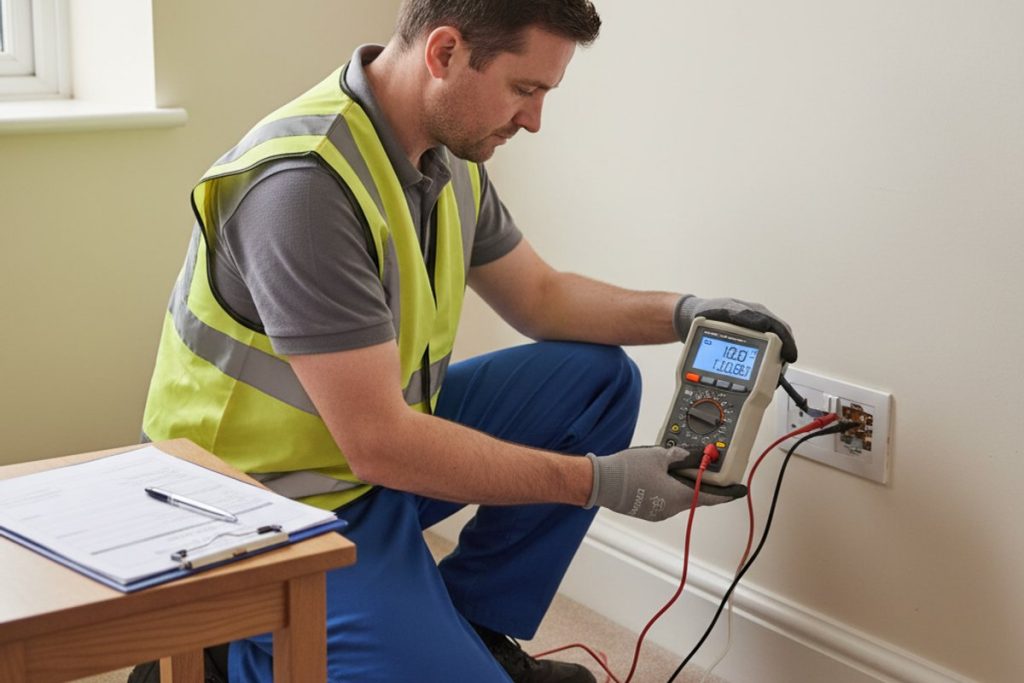
An EICR (Electrical Installation Condition Report) on a UK rental property costs roughly £150 to £250 for a standard 2–3 bed house, £100 to £180 for a 1–2 bed flat, and £250 to £350 for a 4–5 bed. The inspection takes 2 to 3 hours and the coded report lands within a working day. Remedial works, if any, are quoted separately.
UK landlords have needed a valid EICR on every rental property since the Electrical Safety Standards in the Private Rented Sector (England) Regulations 2020, renewed at least every five years or at each new tenancy. Non-compliance can mean a civil penalty of up to £30,000. This guide covers the real 2026 price bands, what the C1/C2/C3 codes mean for your bill, and what to do if the report comes back unsatisfactory.
If your EICR is expiring before a new tenant moves in, or a letting agent has told you the existing report won’t pass insurance renewal, you are probably trying to do two things at once: price the inspection honestly, and work out whether a bad report is going to turn into a bigger bill. Landlord EICR pricing is less wild than rewire pricing, but quote-to-quote variation still catches people out, usually because the remedial scope is written into the same line.
What follows is a plain breakdown of what an EICR actually costs in the UK in 2026, what the inspection checks, the 2020 regulations you need to meet, and the practical path from an unsatisfactory report to a certificate your insurer and local authority will accept.
How much does an EICR cost in the UK in 2026?
Typical price bands for a NICEIC-registered contractor inspection, ex-VAT:
| Property type | Typical EICR cost | Duration |
|---|---|---|
| 1–2 bed flat or maisonette | £100 – £180 | 1.5–2 hours |
| 2–3 bed house | £150 – £250 | 2–3 hours |
| 4–5 bed house | £250 – £350 | 3–4 hours |
| HMO (per unit or per circuit basis) | £200 – £400+ per unit | varies |
| Small commercial unit (café, shop, office) | £300 – £700 | 3–6 hours |
The lower end of each band applies to modern PRS stock with accessible consumer units and no access issues. The upper end applies to period properties with split circuits, older boards, or HMOs where the inspector has to test each self-contained unit on its own paperwork. A 3-bed let in Toxteth with a 1990s consumer unit will usually come in at the middle of the band; a converted Victorian terrace in Anfield with a fuse-board needing more careful testing will run at the top.
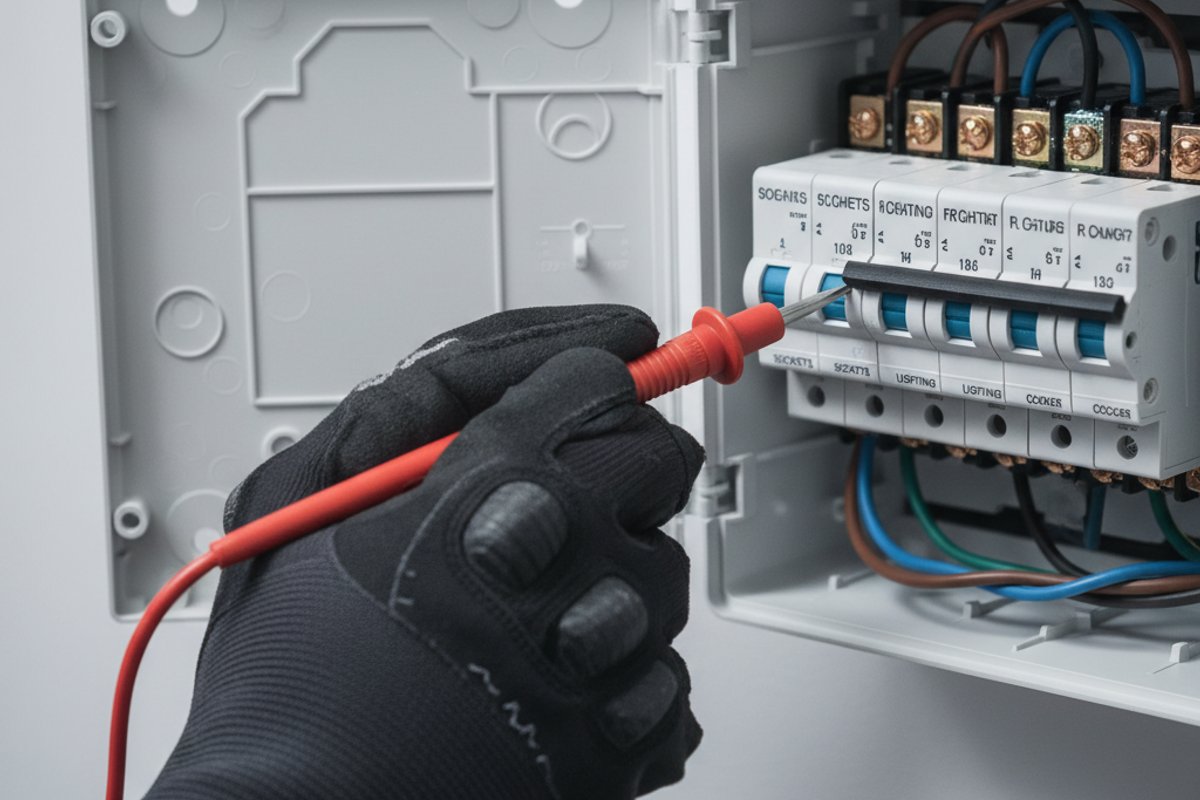
Remedial works are always quoted separately from the inspection itself. That is not a sales tactic; the inspector genuinely does not know what will be flagged until the circuits are tested. Ask for the inspection price on its own first, then a separate remedial quote once the report is in your hand.
What does an EICR actually check?
A landlord EICR is a fixed-installation inspection to BS 7671 (the 18th Edition Wiring Regulations). The inspector tests every circuit in the property against a standard checklist: earthing and bonding, insulation resistance, polarity, RCD protection, continuity of conductors, correct overcurrent protection, and visible condition of cables, accessories, and the consumer unit. Each circuit is checked, not just the fuse board.
It is not the same as PAT testing. PAT covers portable appliances (plug-in items: fridges, kettles, lamps); an EICR covers the fixed wiring. Most landlords need both, but the EICR is the legal requirement under the 2020 regulations; PAT is strongly recommended but not statutory in the same way.
What is not in the inspection: the tenant’s own appliances, any landlord-supplied furniture, smoke alarms (though the inspector will note if they are missing), or gas. Each of those falls under a separate certificate or check.
Why UK landlords are legally required to have an EICR
Since 1 April 2021, every assured tenancy, assured shorthold tenancy, and licence-to-occupy in the private rented sector in England has required a satisfactory EICR. The law is the Electrical Safety Standards in the Private Rented Sector (England) Regulations 2020. The rules are straightforward:
- Every five years, or sooner if the report specifies. A new tenancy usually triggers a fresh inspection if the existing report is close to expiry.
- Copy to the tenant within 28 days of the inspection.
- Copy to the local authority within 7 days of a written request.
- Remedial work from a C1, C2, or FI code must be completed within 28 days (or sooner if the report states), and written confirmation from the electrician provided to the tenant and local authority.
- Failing to comply can result in a civil penalty of up to £30,000 imposed by the local housing authority.
Scotland and Wales run under separate regimes (the Housing (Scotland) Act and the Renting Homes (Wales) Act) but the practical cycle is the same: inspect, remedy, certify, renew every five years.
C1, C2, C3 and FI codes: what they mean for your bill
The inspector codes every issue on the report. Only four codes are used, and each maps to a clear landlord action:
| Code | Meaning | What it means for you |
|---|---|---|
| C1 | Danger present. Risk of injury. | Must be made safe immediately. The certificate cannot be satisfactory until the C1 is cleared. |
| C2 | Potentially dangerous. | Must be remedied for the certificate to turn satisfactory. 28-day clock starts from the report date. |
| FI | Further investigation required. | Must be resolved (additional testing or fault-finding) before the certificate can be satisfactory. |
| C3 | Improvement recommended. | Does not block a satisfactory certificate. Worth doing at the next convenient opportunity; not legally required. |
A report with only C3 codes is satisfactory. The landlord has a valid certificate, no further action needed. A report with any C1, C2, or FI is unsatisfactory, and the 28-day remedial clock begins.
What happens if my EICR comes back unsatisfactory?
An unsatisfactory EICR is not a fine in itself. It is a trigger for remedial work. Here is the usual sequence in 2026:
- The electrician gives you the coded report, usually same day or next working day.
- You or the inspecting contractor scopes the remedial work. Typical price bands: fuse-board replacement only £450–£800; partial rewire (one or two circuits) £1,200–£2,500; full property rewire £3,500+ on a 3-bed.
- Works are completed within 28 days of the report date.
- The electrician issues a Minor Electrical Installation Works Certificate (MEIWC) or Electrical Installation Certificate (EIC) depending on scope, plus a confirmation letter that the remedial items are cleared.
- You send the remedial confirmation to the tenant and, if requested, the local authority.
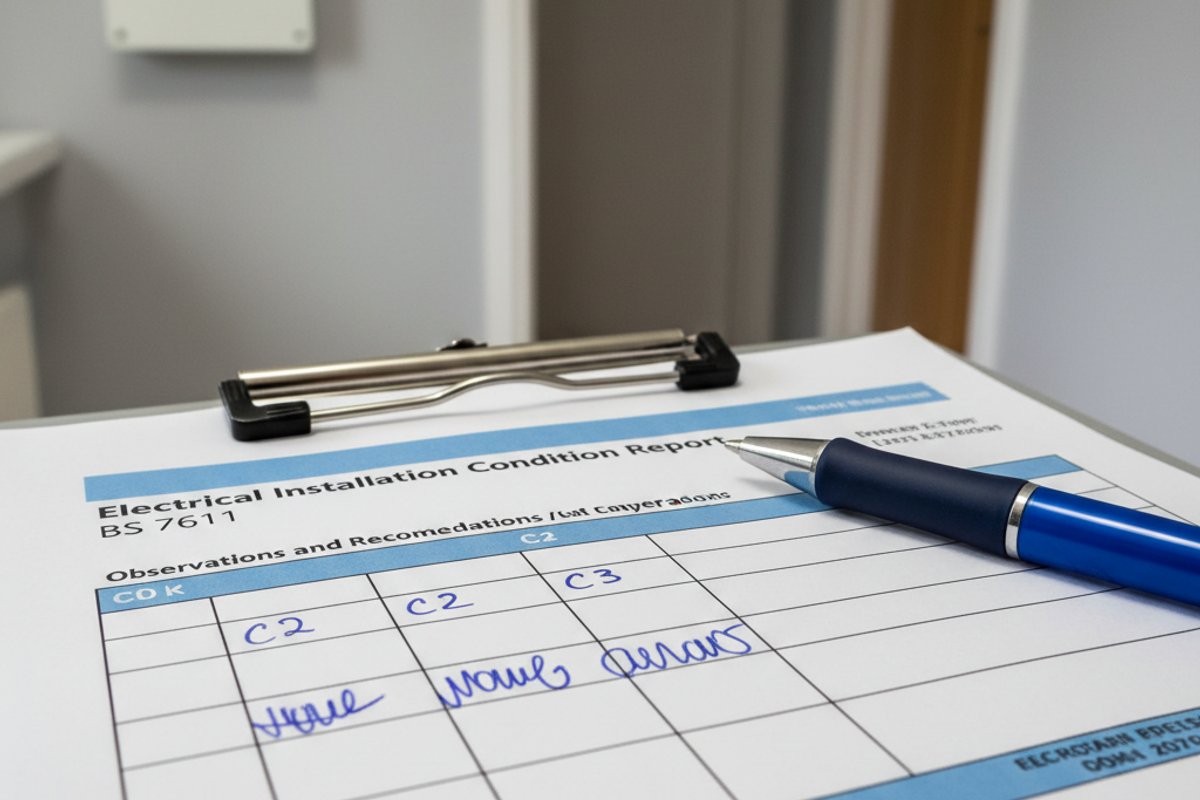
On any property built before 1975, an unsatisfactory EICR across multiple circuits is often a signal that a partial rewire makes more sense than piecemeal repairs, and a NICEIC-registered contractor will tell you that honestly at quote time. If C2 codes are flagged on three or more circuits, you are usually past the “fix one thing” stage and a partial or full rewire becomes the cleaner option.
What you get with a Maximec landlord EICR
- Fixed inspection price by property size, quoted before the visit.
- Same-day or next-working-day coded report, with C1/C2/C3/FI items listed circuit by circuit.
- Remedial works quoted separately with a clear schedule that fits the 28-day window in the 2020 regulations.
- Certificate accepted by insurers, letting agents and local authorities. NICEIC Platinum Promise on remedial work carried out.
- We work around tenants in situ or within a void window. Written 24-hour notice for occupied properties.
How to get an accurate EICR quote (and what to ask)
A sensible landlord quote follows this shape:
- A fixed price for the inspection itself by property size, not by “per hour”.
- A stated turnaround for the written report (same day, next working day, within 48 hours).
- A separate remedial quote if anything fails, with itemised labour and materials.
- The contractor’s NICEIC registration number (you can verify at niceic.com).
- A clear scheduling plan for tenant access if the property is occupied, with written tenant notice of at least 24 hours for the inspection visit.
- Confirmation that the certificate will be accepted by your insurer, letting agent, and the local authority. A NICEIC-certified EICR will be.
If the quote bundles inspection and remedial into one line, or if the contractor cannot give you that number, walk. The £30,000 penalty in the 2020 regulations is for the landlord, not the inspector, so the paperwork has to be watertight.
Frequently Asked Questions
How much is an EICR for a 3-bed rental house in the UK?
For a standard 3-bed rental in 2026, expect £150 to £250 ex-VAT for the inspection, with the lower end on modern PRS stock and the upper end on pre-1970s properties with split circuits or a period consumer unit. The inspection itself takes 2 to 3 hours, and the coded report lands within a working day. Remedial works, if flagged, are quoted separately.
How often do landlords need an EICR?
Every five years, or sooner if the report specifies, under the Electrical Safety Standards in the Private Rented Sector (England) Regulations 2020. A new tenancy with a report nearing expiry usually triggers a fresh inspection to keep the five-year clock aligned to the tenancy cycle. HMOs sometimes run on shorter inspection cycles depending on local authority licensing conditions.
What happens if I don’t have an EICR as a landlord?
The local housing authority can impose a civil penalty of up to £30,000 for non-compliance with the 2020 regulations. In addition, an uncertified installation invalidates most landlord insurance policies, and letting agents will usually refuse to advance a new tenancy without a valid EICR on file. The tenant is also within their rights to report the property to the council.
Is the landlord or the tenant responsible for the EICR cost?
The landlord. The 2020 regulations place the duty and the cost squarely on the landlord. You cannot recharge the inspection to the tenant via the tenancy agreement or a hidden fee. The Tenant Fees Act 2019 prohibits it. The cost is a routine business expense.
How long does an EICR take?
For a 2–3 bed house, two to three hours on site for the testing itself. The inspector needs access to the consumer unit, every socket and switch, and the loft (for cable inspection). The written report typically follows within 24 hours. Larger properties and HMOs take proportionally longer.
What’s the difference between an EICR and PAT testing?
An EICR covers the fixed wiring of the property: consumer unit, circuits, sockets, switches, lighting points. PAT testing covers plug-in portable appliances: the kettle, the lamp, the landlord-supplied fridge. The EICR is a statutory requirement under the 2020 regulations. PAT is strongly advised and often required by insurers on furnished lets, but is not set out in the same regulation.
Can I use the same EICR for insurance, mortgage, and selling the property?
Usually yes for insurance and mortgage purposes. A NICEIC-registered satisfactory EICR is accepted across the sector. For selling, a mortgage surveyor for the buyer’s side may want a fresh EICR if yours is over three years old, even if still within its five-year validity. For a tenanted property being sold with tenants in situ, keep the current EICR valid until the sale completes.
Can an EICR be “passed” on the day with a small fix?
Occasionally, yes. A single C2 that can be cleared on the spot, such as a missing blanking plate, a loose earth, or a faulty socket, can sometimes be rectified during the visit, the report updated to satisfactory, and the certificate issued the same day. Anything more involved (consumer unit, rewire, multiple circuits) gets a separate remedial quote and a follow-up visit.
Related Services
Need an EICR before the new tenancy?
We inspect landlord properties across Liverpool and Merseyside and turn the coded report around within a working day. If the report flags remedial works, we quote them separately so you can make the call on scope before committing.
NICEIC-registered and covered by the Platinum Promise. Founder-led. Michael is the lead electrician on the majority of rewire and remedial jobs. Based in Rainhill; covering Liverpool and the North West. Call 0151 792 3243 or request a free no-obligation quote.