
TLDR
A plastic consumer unit is not illegal to keep in place. The law only applies when the board is replaced, at that point, the new installation must use a metal enclosure under BS 7671 Regulation 421.1.201 (in force since January 2016). What matters more than the plastic casing is whether the board has adequate RCD protection, sufficient ways for modern circuits, and whether it can actually be certified on an EICR.
This post covers what the plastic rule actually means, when you genuinely need to replace the board, and the one scope limit most electricians do not tell you upfront. About a 5-minute read.
If you have just had an EICR (Electrical Installation Condition Report) on your Liverpool property, or your surveyor flagged the consumer unit when you were buying the house, chances are someone has mentioned the “plastic fuse box” rule. There is a lot of misinformation about what it actually means, some traders use it to push unnecessary upgrades, and some homeowners ignore it entirely when they should not.
The accurate position is straightforward. Keeping an existing plastic consumer unit is permitted. Replacing it with another plastic unit is not. And neither rule tells you whether the board is actually safe for your property. That is a separate question, and the more important one.
What Is Wrong with a Plastic Consumer Unit?
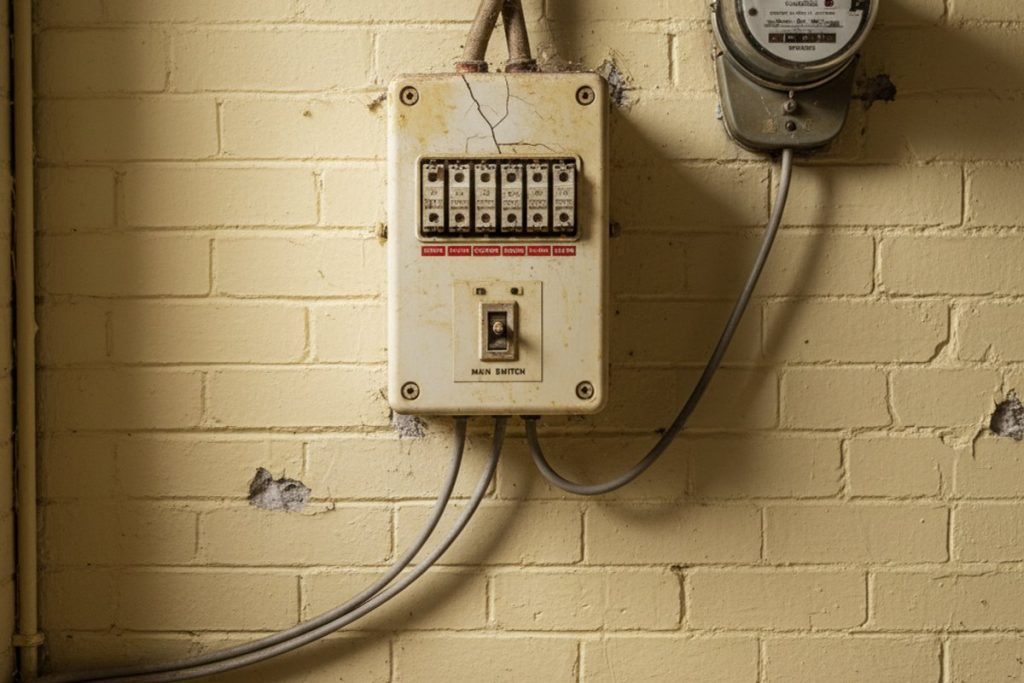
The original consumer units fitted to most Liverpool homes built between the 1970s and the late 1990s were manufactured in thermoplastic, a plastic that is lightweight, cheap, and electrically insulating, but combustible. When an arc fault occurs inside a consumer unit (a loose connection, damaged cable termination, or failing device that generates an electrical arc), a plastic enclosure can catch fire. A metal enclosure cannot.
Arc faults inside consumer units are rare but not unknown. The investigation into domestic electrical fires carried out by Electrical Safety First found consumer units as a contributing factor in a meaningful proportion of cases. The response from the regulatory bodies was Regulation 421.1.201 in the 18th Edition of BS 7671 (carried over from Amendment 3 to the 17th Edition, effective January 2016): new domestic consumer unit installations must use a non-combustible enclosure, in practice, metal.
The Electrical Safety First guidance on fuse boxes and consumer units is clear: the rule applies at the point of replacement, not to existing installations. A plastic board that is functioning safely and has been inspected recently is not a legal hazard. One that is being replaced must be replaced with a metal unit.
The Signs Your Board Actually Needs Replacing Now
The plastic/metal distinction is a regulatory point, not a safety assessment. The following are the real reasons a consumer unit in a Liverpool property needs replacing:
- No RCD protection on socket circuits. Pre-1990s boards often have MCBs only, with no RCD protection at all. The 30mA RCD requirement for socket circuits in domestic properties has been in the regulations since 2008. A board with no RCD is a C2 finding on an EICR and must be addressed for a satisfactory report.
- An EICR C2 code against the consumer unit. A C2 (potentially dangerous) finding requires remediation before the report can become satisfactory. If the code is against the board itself, failed device, inadequate protection, damaged enclosure, replacement rather than repair is usually the right scope.
- No spare ways for new circuits. If you are adding an EV charger, a kitchen extension circuit, or an outbuilding supply, and the existing board has no room, a replacement board with more ways is the practical solution.
- Original rewirable fuse carriers. Some Liverpool pre-war terraces in areas like Walton, Anfield, and Kirkdale still have the original ceramic rewirable fuse holders, the ones with wire that needs replacing when the fuse blows. These provide no RCD protection whatsoever and no accurate overload protection. Replacement is overdue.
- Surveyor or insurer flag. Some home insurers now ask whether the consumer unit has RCD protection and when it was last inspected. A surveyor’s report that flags the board can affect a property sale or remortgage. A replacement and EICR resolves this definitively.

The Scope Limit Most Electricians Do Not Tell You
Here is the honest part that gets left out of most consumer unit replacement quotes: replacing the consumer unit alone does not certify the existing wiring. The Electrical Installation Certificate (EIC) issued after a consumer unit replacement covers the board and the connections made during the installation. It does not certify the condition of the cables already in the walls, the accessories (sockets, switches), or the earthing and bonding of the existing installation.
On a pre-1960s Liverpool terrace where the ring main is run in rubber-insulated cable, fitting a new metal RCBO board on top of that wiring is only fixing half the problem. The new board’s RCBO devices will provide better protection than the old split-load RCD, but the wiring itself may still be a C1 or C2 finding if an EICR is subsequently carried out on the full installation.
The honest conversation is: if the board is being replaced because of an unsatisfactory EICR, check what else the EICR found. If there are C1 or C2 findings on the wiring as well as the board, a partial or full rewire of those circuits may be the more cost-effective long-term solution. Maxim Electrical Contractors will tell you exactly this after a survey, the fuse board replacement quote and the broader assessment are part of the same conversation, not separate ones designed to up-sell.
What Happens During a Consumer Unit Replacement
The process for a standard consumer unit replacement in a Liverpool semi-detached or terraced property runs as follows:
- Survey. Michael visits, inspects the existing board, checks the meter tails (the cables between meter and consumer unit, many pre-1990s properties have undersized 16mm tails that need upgrading to 25mm), and assesses the earthing and bonding arrangement. A written, itemised quote follows.
- Notification. As NICEIC-registered contractors, Maxim Electrical Contractors notify Building Control on your behalf before the work starts. Consumer unit replacement is notifiable work under Part P of the Building Regulations.
- Isolation. On the day, the supply is switched off at the meter. This typically means no power to the property for 5 to 8 hours.
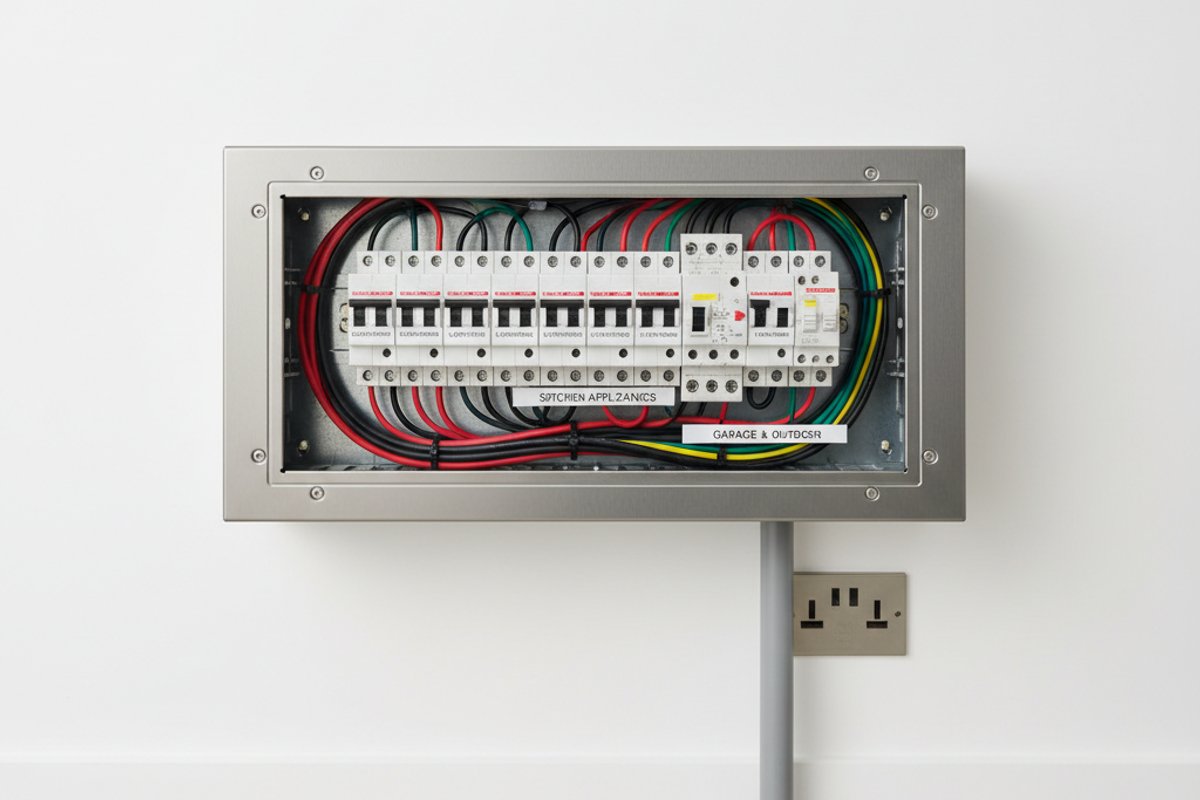
- Removal and rewiring. The old board is removed. Each circuit is connected to the new RCBO board, with the RCBO rated correctly for the cable and the load.
- Testing. Every circuit is tested with a multifunction tester (MFT), insulation resistance, earth fault loop impedance, RCD trip times. The readings go into the EIC schedule.
- Certification. An Electrical Installation Certificate (EIC) is issued on the same day, confirming the installation is compliant with BS 7671. This is the document you keep with the property file.
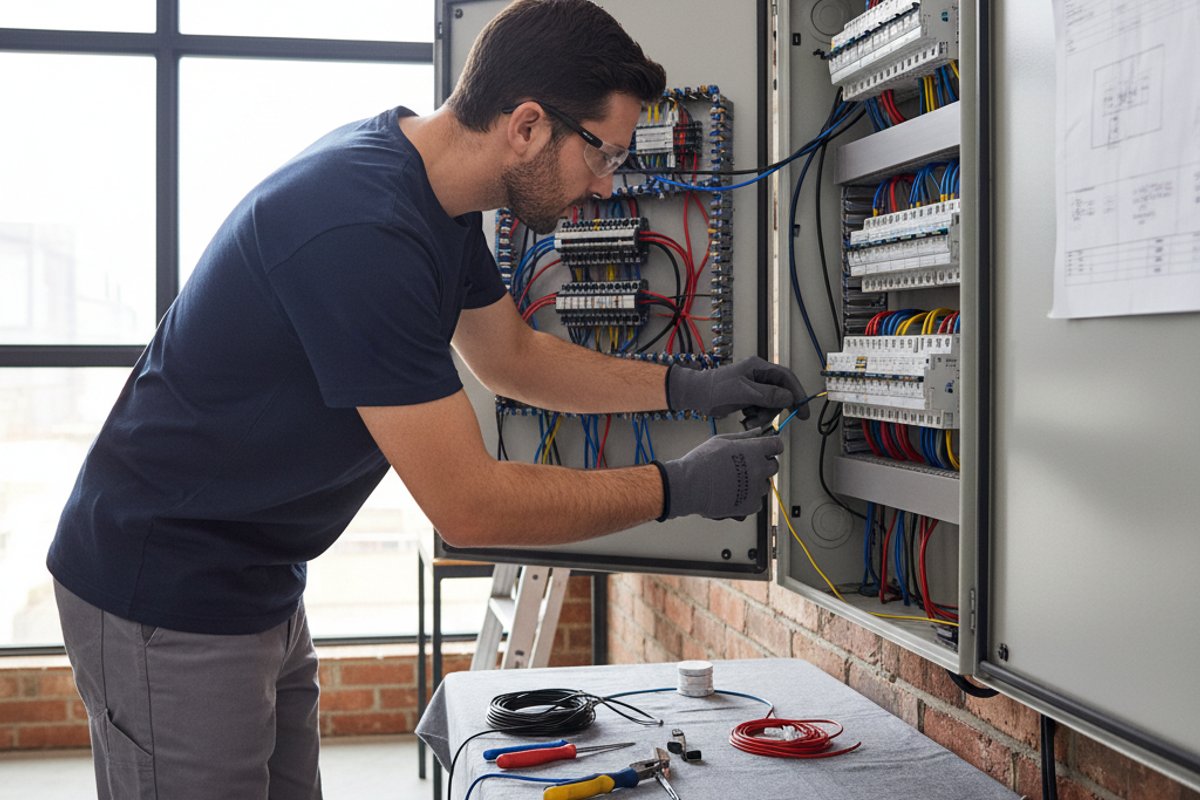
From a recent job
“Highly recommended. Couldn’t have wanted more from the service Michael provided. Prompt and quick to sort out an issue I had with my consumer unit.”
Geoff Gaskell, Homeowner, consumer unit urgent repairRelated Services
The plastic/metal question is the start of the conversation, not the end of it. If your existing board has no RCD protection, has run out of ways, or has been flagged on an EICR, the case for replacement is clear regardless of whether the enclosure is plastic or metal. The more important question is whether the wiring the board connects to is also in a state that warrants the new board to be installed in the first place. That is what a site survey establishes.
Your consumer unit past its best?
A free site survey with Michael takes around 30 minutes and results in a written, itemised quote, including an honest assessment of whether the wiring also needs attention. Consumer unit replacements are typically completed in a single day, with an EIC and Part P certificate issued on completion.
NICEIC-registered and covered by the NICEIC Platinum Promise. Based in Rainhill; covering Liverpool and the North West. Call 0151 792 3243 or request a free no-obligation quote.
Frequently Asked Questions
Is a plastic fuse box illegal in the UK?
No. A plastic consumer unit that is already in place is not illegal. The regulation (BS 7671 Regulation 421.1.201, in force since January 2016) prohibits installing a new plastic domestic consumer unit, so any replacement must be in a metal enclosure. Keeping an existing plastic board in service is permitted, though an EICR inspection will assess whether it provides adequate protection for current regulations.
Do I need an EICR before replacing my consumer unit?
An EICR is not legally required before a consumer unit replacement, but it is often the right thing to do if you are not sure about the condition of the rest of the installation. An EICR carried out before the replacement gives you a full picture of what the wiring behind the board looks like, so the replacement quote can include any remedial work on the wiring at the same time, rather than discovering issues during the installation that add cost and time.
How long does a consumer unit replacement take?
Most consumer unit replacements in a standard 3-4 bedroom Liverpool property take one full working day, typically 6 to 8 hours. The electricity supply is off for most of this time while the new board is wired and tested. The EIC and Part P certificate are issued on the same day in most cases.
What certificate do I get after a consumer unit replacement?
An Electrical Installation Certificate (EIC) is issued on completion, confirming the new consumer unit was installed in compliance with BS 7671 and notified under Part P of the Building Regulations. The EIC includes the test results for every circuit, insulation resistance, earth fault loop impedance, and RCD trip times. Keep this document with your property file: it is what a future EICR inspector, solicitor, or insurer will ask for.
How much does a consumer unit upgrade cost in Liverpool?
A straightforward consumer unit replacement in a 3-4 bedroom Liverpool property typically costs between £400 and £800, including the new board, materials, labour, and certification. The price rises if the meter tails also need upgrading (25mm tails are required in most new installations and many older properties have 16mm tails), or if any remedial work on existing circuits is required before the installation can be tested and certified. Maxim Electrical Contractors will provide a written, itemised quote after a free site survey.
Will a new consumer unit affect my home insurance?
A modern metal RCBO consumer unit with the EIC on file is a positive indicator for home insurers. Some insurers ask about RCD protection and the age of the installation. An up-to-date consumer unit with a satisfactory EICR removes any ambiguity. If your existing board has been flagged by an insurer, a replacement resolves it, contact your insurer to confirm their specific requirements.
Does replacing a consumer unit require Part P notification?
Yes. Consumer unit replacement is notifiable work under Part P of the Building Regulations (Schedule 4, Part 1). An NICEIC-registered electrician self-certifies the work and notifies Building Control on your behalf, you do not need a separate Building Control inspection. The Part P certificate and EIC together confirm the work was carried out by a registered contractor to current regulations.