
TLDR
Liverpool landlords must fit at least one smoke alarm on every storey of the property that is used as living accommodation, and test them on the first day of every tenancy. The Smoke and Carbon Monoxide Alarm (Amendment) Regulations 2022 added a new requirement: a carbon monoxide alarm must now be fitted in any room containing a gas appliance (not just solid fuel), this includes gas boilers and gas cookers.
This post covers what the 2022 update changed, the floor-by-floor placement rules, the carbon monoxide alarm expansion, and what HMO landlords in Liverpool face on top of the standard requirements. About a 6-minute read.
Liverpool landlords operating in the private rented sector face two separate sets of smoke and carbon monoxide alarm obligations: the baseline Smoke and Carbon Monoxide Alarm Regulations (England) 2015, as amended in 2022, which apply to all private rented properties; and, for HMOs (Houses in Multiple Occupation), the additional requirements under BS 5839-6 and Liverpool City Council licensing conditions. Getting either wrong can mean enforcement action, a fine, and complications with your property licence.
This post covers the obligations that apply to most Liverpool landlords in plain terms, with the specific regulation references where they matter. The HMO requirements are summarised here, a more detailed treatment of BS 5839-6 grades and Liverpool licensing conditions is covered in a separate guide.
What the 2022 Update Actually Changed
The original 2015 Smoke and Carbon Monoxide Alarm (England) Regulations required landlords to install a smoke alarm on each storey of the property used as living accommodation, and a carbon monoxide alarm in any room with a solid fuel burning appliance (wood burner, open fire, coal fire). The 2015 regulations also required landlords to test alarms on the first day of each new tenancy.
The Smoke and Carbon Monoxide Alarm (Amendment) Regulations 2022, in force from 1 October 2022, made two significant changes:
- Carbon monoxide alarms extended to gas appliances. The requirement now covers any room containing a fixed combustion appliance, this includes gas boilers (in utility rooms, cupboards, and kitchens) and gas fires. It does not include gas cookers, though fitting a CO alarm near a gas cooker is still recommended practice.
- Responsibility to repair shifted to the landlord. Under the 2015 regulations, if a tenant reported a faulty alarm, it was ambiguous who was responsible for replacing it. The 2022 amendment makes it explicit: the landlord must repair or replace a faulty alarm as soon as reasonably practicable after being notified.
If your Liverpool rental property has a gas combi boiler, the majority of terraced and semi-detached properties in areas like Wavertree, Kensington, and Anfield do, you are now required to have a carbon monoxide alarm in the same room as that boiler, or as close to it as the fixed appliance allows.

Where Smoke Alarms Must Be Fitted: The Floor-by-Floor Rules
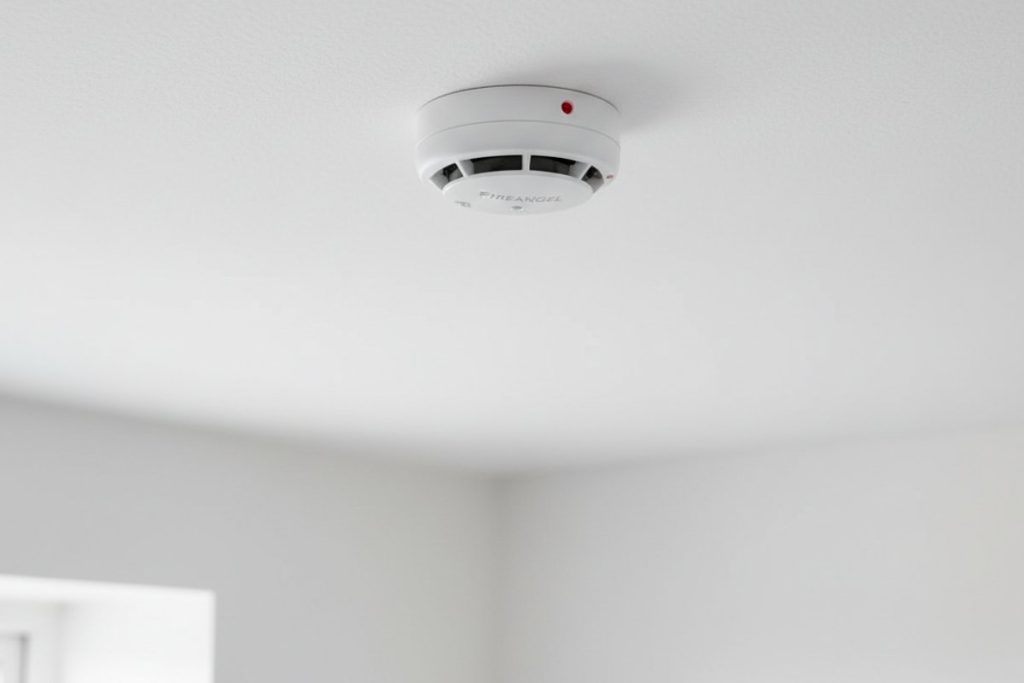
The regulations require at least one smoke alarm on every storey of the property that is used as living accommodation. “Living accommodation” means any storey where a tenant spends time habitually, so a two-storey property with bedrooms and a bathroom upstairs and a sitting room and kitchen downstairs needs at least two smoke alarms, one on each floor.
The regulations do not specify that alarms must be mains-wired, a battery-operated alarm that is in working condition meets the requirement. However, for properties undergoing a full refurbishment, mains-powered interlinked alarms (Grade D under BS 5839-6, with a battery backup) are the better long-term solution and are increasingly expected by Liverpool City Council on selective licensing renewals.
Placement matters within the floor as well. The guidance from the government’s explanatory booklet is that alarms should be positioned to give early warning, this means mounting on the ceiling in the hallway or landing for ground and upper floors respectively, rather than inside individual rooms where a sleeping tenant may not hear the alarm from another area.
For the smoke alarm installation to comply with the tenancy agreement and licence conditions, keep a written record of the make, model, installation date, and the test carried out on the first day of each tenancy. This is the document that shows an enforcing authority you have met your obligations.
Carbon Monoxide Alarms: The 2022 Expansion in Detail
CO alarms must now be fitted in every room containing a fixed combustion appliance. In a typical Liverpool terraced property with a gas combi boiler in the kitchen or utility room and no solid fuel appliances, this means at a minimum one CO alarm in the room where the boiler is located.
Key points on CO alarm placement and specification:
- Positioning. CO alarms should be mounted at head height (1.5 metres from the floor) or as specified by the manufacturer, and at least 1 metre from the appliance. They should not be fitted directly above a gas hob or in an extractor fan path.
- Battery vs mains. Battery-operated CO alarms meet the legal minimum. However, a CO alarm with a sealed long-life battery (typically 10 years) is more practical than one that requires annual battery replacement, which many tenants fail to carry out.
- Combination alarms. Combination smoke and CO alarms exist but are generally not recommended for compliance, a CO alarm in the boiler room and a smoke alarm on the landing each do their job correctly; a combination unit in one location may not cover both hazards adequately.
- Testing. CO alarms must be tested on the first day of each tenancy alongside smoke alarms. Include CO alarms in your tenancy check-in inventory and record that they tested operational.
HMOs in Liverpool: The Higher Standard That Applies
If your property requires a mandatory HMO licence (five or more persons forming two or more households, in three or more storeys) or is subject to Liverpool City Council’s selective licensing scheme, the smoke alarm requirements go beyond the baseline 2022 Regulations. Liverpool City Council’s HMO licensing conditions require an interlinked fire alarm system, typically Grade D, Category LD2 or LD3 under BS 5839-6:2019, across the property.
A Grade D system means mains-powered smoke alarms with a battery backup and an interconnect link, when one alarm activates, all alarms in the system sound. Standalone battery alarms do not meet this standard for HMOs. The installation must be carried out by a competent person and documented appropriately for the licence application or renewal.
The fire and security systems installation for an HMO is a job that requires proper specification, not just fitting the cheapest interlinked smoke alarm set from a DIY store. The wrong category of detection in the wrong zones will not satisfy a licensing inspection, and the council can impose conditions requiring a full upgrade at the landlord’s cost before the licence is renewed.

Testing Requirements and Landlord Responsibilities
The regulations require landlords to test every smoke and CO alarm on the first day of each new tenancy. This means pressing the test button on each alarm in the tenant’s presence (or having this recorded in the check-in inventory signed by the tenant) at the start of the tenancy, not just at the annual inspection or property visit.
Between tenancies, during void periods, it is good practice to test alarms, replace batteries where applicable, and check that all alarms are within their replacement date. Smoke alarms typically have a 10-year lifespan from the manufacture date printed on the unit. An alarm older than 10 years should be replaced regardless of whether it passes a button test, the sensor degrades over time and will not detect smoke reliably.
For landlords managing portfolios across Liverpool, whether in Aigburth, Kirkdale, or the Dingle, keeping a simple spreadsheet with each property’s alarm make, model, installation date, and the tenancy dates when testing was recorded is the minimum defensible record. If enforcement action is taken and you cannot show that alarms were tested on tenancy day one, the burden of proof falls on you.
What you get
- Smoke and CO alarm installation to current legal standard, covering the 2022 Regulations’ requirements for placement and specification.
- Interlinked mains alarm systems for HMOs, Grade D, BS 5839-6 compliant, with battery backup and all zones documented.
- Written confirmation of installation, a record of make, model, location, and installation date for your compliance file and licence renewal.
- NICEIC-registered installation, NICEIC Platinum Promise on all work, protecting the installation for up to six years.
- Advice on the right spec for your property type, a Grade D interlinked system for an HMO is not the same spec as a two-bedroom flat. We will tell you what applies before fitting anything.
Related Services
The smoke alarm rules are not complex, but they have changed and the consequences of non-compliance in Liverpool, where the council actively enforces licensing conditions, are real. Fitting the right alarms, tested correctly, and recorded in the tenancy file takes an hour per property and removes this from your compliance risk list entirely.
Need smoke alarms fitted before your next tenancy?
Maxim Electrical Contractors installs smoke and carbon monoxide alarm systems for Liverpool landlords, from a single property to a managed portfolio. We specify the right system for your property type, fit it to current legal standards, and provide the written record you need for your compliance file.
NICEIC-registered and covered by the NICEIC Platinum Promise. Based in Rainhill; covering Liverpool and the North West. Call 0151 792 3243 or request a free no-obligation quote.
Frequently Asked Questions
Are battery smoke alarms acceptable for landlords in 2026?
Yes, battery-operated smoke alarms meet the minimum requirement under the Smoke and Carbon Monoxide Alarm (Amendment) Regulations 2022 for standard private rented properties (not HMOs). However, for HMO properties subject to Liverpool City Council licensing conditions, mains-powered interlinked alarms are required under BS 5839-6. For any property, a long-life sealed battery alarm reduces the maintenance burden and the risk of a tenant removing the battery.
Where exactly must smoke alarms be placed?
At least one smoke alarm must be fitted on every storey used as living accommodation. The government guidance recommends ceiling-mounted alarms in hallways and landings, not inside individual rooms, to maximise coverage and ensure audibility throughout the property. For a two-storey Liverpool terrace, one alarm on the ground floor hallway and one on the upper landing typically meets this requirement.
Do I need a carbon monoxide alarm if I have a gas boiler?
Yes, since 1 October 2022, a carbon monoxide alarm is required in any room containing a fixed combustion appliance other than a gas cooker. This includes gas boilers. If your Liverpool property has a combi boiler in the kitchen, utility room, or airing cupboard, a CO alarm must be fitted in that room. This is one of the most commonly overlooked changes from the 2022 amendment.
Do I need interlinked alarms in a standard (non-HMO) rental property?
The 2022 Regulations do not require interlinked alarms for standard private rented properties, standalone battery alarms on each floor are sufficient for compliance. However, mains-powered interlinked alarms are increasingly recommended (and in some cases expected by letting agents and insurers), and they are required for HMO properties under BS 5839-6. If you are refurbishing a property, fitting mains interlinked alarms at that stage is more cost-effective than retrofitting later.
What happens if a tenant reports a faulty smoke alarm?
Under the 2022 Regulations, the landlord is responsible for repairing or replacing a faulty alarm as soon as reasonably practicable after being notified. “Reasonably practicable” is not defined precisely, but prompt action, within a few days of notification, is the safe approach. Keep a record of the tenant’s notification, your response, and when the alarm was replaced. If an inspection is triggered and you cannot show you acted on a known fault, enforcement is more likely.
When should smoke alarms be replaced?
Smoke alarms have a recommended service life of 10 years from the manufacture date printed on the unit. After 10 years, the sensor degrades and may not detect smoke reliably even if it passes a button test. Replace any alarm that has exceeded this age during your next void period. For a managed portfolio, maintain a spreadsheet of installation dates per property and flag approaching 10-year renewals in advance.
Do smoke alarm requirements apply to my Liverpool holiday let?
Holiday lets (short-term furnished holiday lettings) are not covered by the 2022 Smoke and Carbon Monoxide Alarm Regulations, which apply specifically to assured and regulated tenancies in the private rented sector. However, holiday lets in England are subject to separate fire safety obligations under the Regulatory Reform (Fire Safety) Order 2005 if they can accommodate more than one household simultaneously. A risk assessment and appropriate smoke detection are expected. Maxim Electrical Contractors can advise on the right specification for your specific property type.