
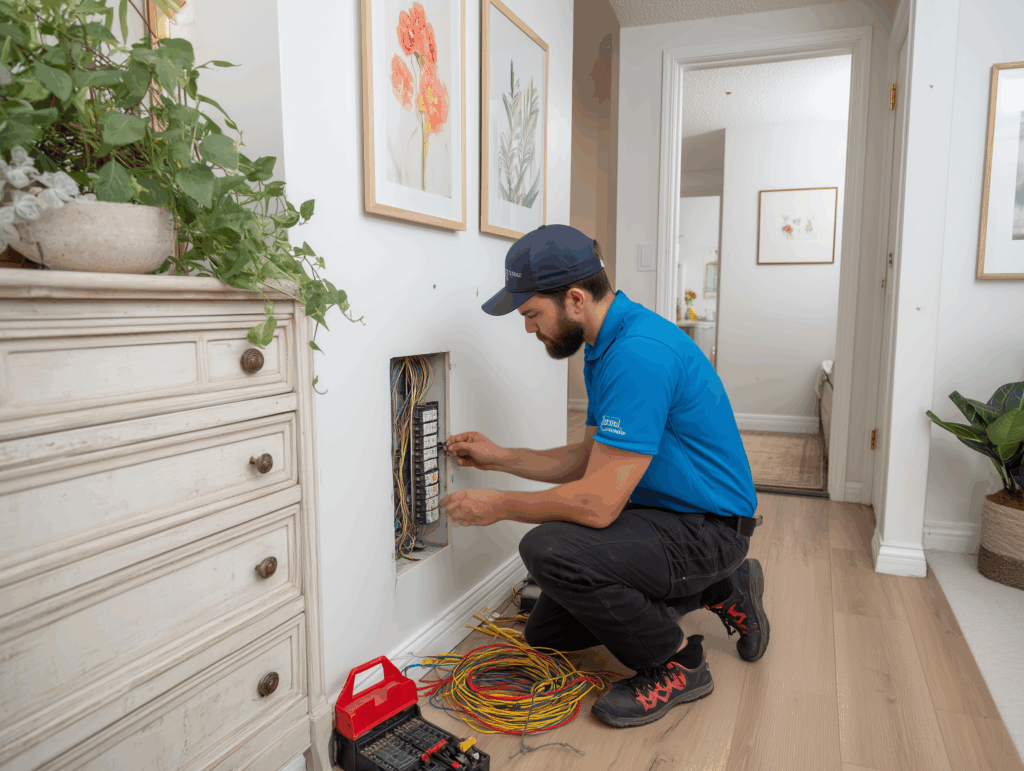
Electrical faults can strike without warning, threatening the safety of your family, employees, and property. Whether it’s a sudden blackout, sparks flying from an outlet, or your circuit breaker repeatedly tripping, these emergencies require calm, immediate action. Understanding how to respond before professional help arrives can mean the difference between a minor inconvenience and a dangerous disaster, such as electrical fires or shock hazards.
In Liverpool, where weather conditions and aging electrical infrastructure sometimes contribute to electrical faults, knowing the right steps to take is essential. For example, having contact details for experienced residential electricians who provide quick and safe repairs can ensure that electrical emergencies are resolved efficiently, minimizing risk and damage.
By staying informed and prepared, you reduce the risks associated with electrical faults, protect your property, and ensure that you and those around you remain safe. Read on to learn the most frequent emergency electrical faults and the immediate measures you should take if they happen to you.
Section 1: Common Types of Emergency Electrical Faults
1.1 Power Outages and Sudden Blackouts
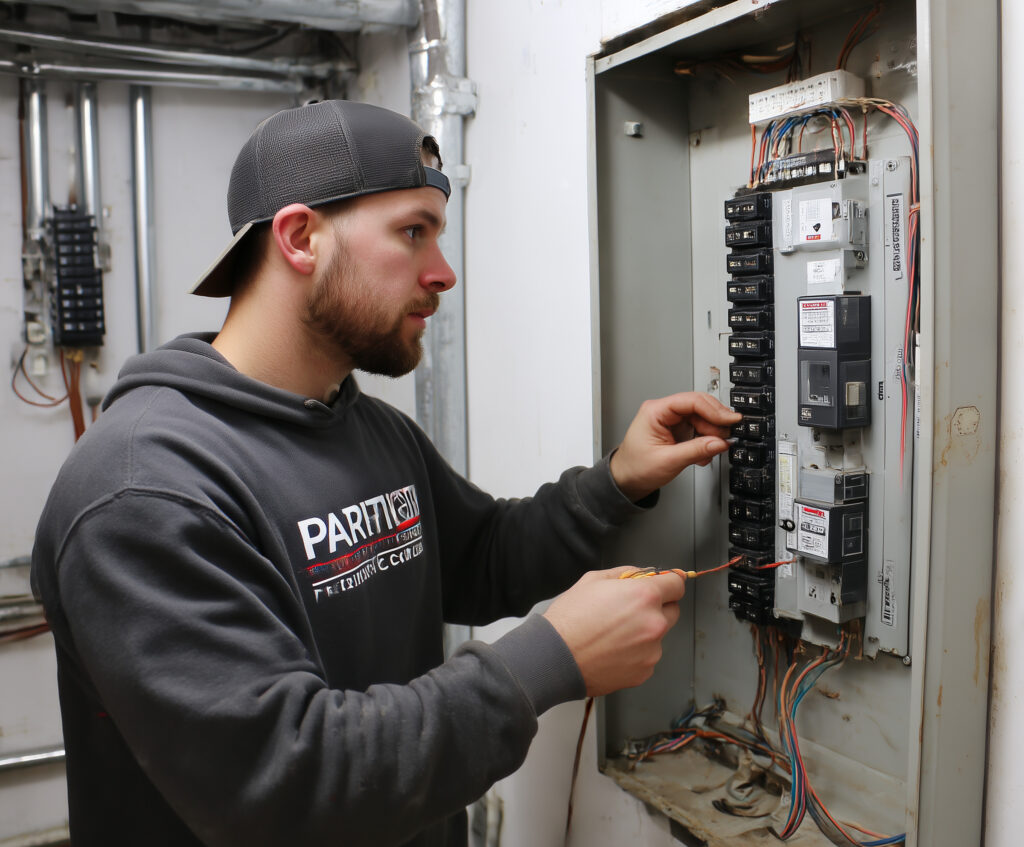
Power outages can be caused by external factors like storms or grid failures, or internal issues such as overloaded circuits or faulty wiring. It’s important to quickly determine whether the outage affects just your property or the wider area.
Common causes of power outages:
- Severe weather (storms, lightning, floods)
- External faults in the power grid
- Overloaded circuits within your home or business
- Faulty wiring or electrical panels
What to do:
- Check if nearby homes or streetlights are also without power.
- Contact your energy provider or check online outage maps.
- If the problem is isolated to your property, switch off major appliances and wait for a qualified electrician.
- Avoid using electrical equipment until the issue is resolved.
1.2 Sparks or Burning Smell from Outlets or Appliances

Sparks, smoke, or a burning smell from outlets or appliances are serious warning signs of overheated wires or electrical faults. These situations pose immediate fire and shock risks.
Warning signs to watch for:
- Visible sparks when plugging in devices
- A burning smell from outlets or appliances
- Discolouration, melting, or scorch marks on plugs or outlets
- Smoke or crackling sounds
Immediate actions to take:
- Turn off the power at the circuit breaker (if safe).
- Unplug the affected device (only if safe).
- Do not pour water on electrical fires—use a Class C fire extinguisher if needed.
- Leave the area and call emergency services if you suspect a fire.
If you’re unsure how professionals diagnose and repair these issues, learn more about the types of services electricians provide.
1.3 Circuit Breaker Tripping Frequently
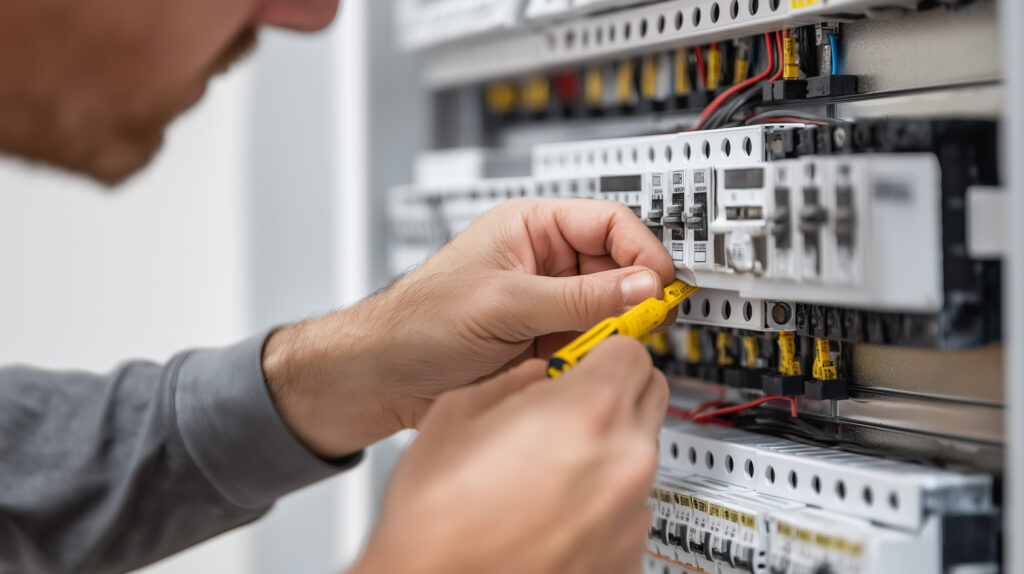
Circuit breakers are designed to trip as a safety measure during electrical faults, but repeated tripping means there’s an ongoing problem that must be addressed.
Common causes of repeated tripping:
- Circuit overload from too many appliances
- Short circuits caused by wiring faults
- Faulty appliances drawing excessive power
- Ground faults in your system
What to do:
- Unplug unnecessary devices and appliances.
- Avoid repeatedly resetting the breaker without investigating the cause.
- Contact a licensed electrician to assess your wiring and load capacity.
- Leave the breaker off until the issue is safely resolved.
1.4 Flickering or Dimming Lights
While flickering lights may seem like a minor annoyance, they often point to more serious issues in your electrical system.
Possible causes:
- Loose wiring connections
- Corroded terminals in the switch or socket
- Voltage fluctuations from external sources
- Overloaded circuits
What to do:
- Avoid touching affected fixtures or outlets.
- Document when and where the flickering happens to help diagnosis.
- Arrange for a professional inspection to identify and repair the fault.
Section 2: Immediate Safety Precautions
Electrical emergencies can escalate quickly, so knowing what to do in the first few minutes is vital. Follow these safety steps to protect yourself, your family, and your property until professional help arrives.
2.1 Do NOT Touch Faulty Appliances or Wiring
Faulty appliances, exposed wires, or damaged outlets can carry a live electrical current, putting anyone who touches them at risk of serious injury or death from electric shock.
Key risks:
- Severe electric shock or burns
- Risk of cardiac arrest from contact with live current
- Further damage to electrical systems
What to do:
- Never touch appliances or wires that appear damaged, scorched, or wet.
- If you see someone being shocked, do not touch them directly.
- Safely switch off the power at the main breaker first, then call 999.
- If you cannot cut the power, use a non-conductive object like a wooden stick to push the person away from the source.
2.2 Turn Off the Main Power Supply
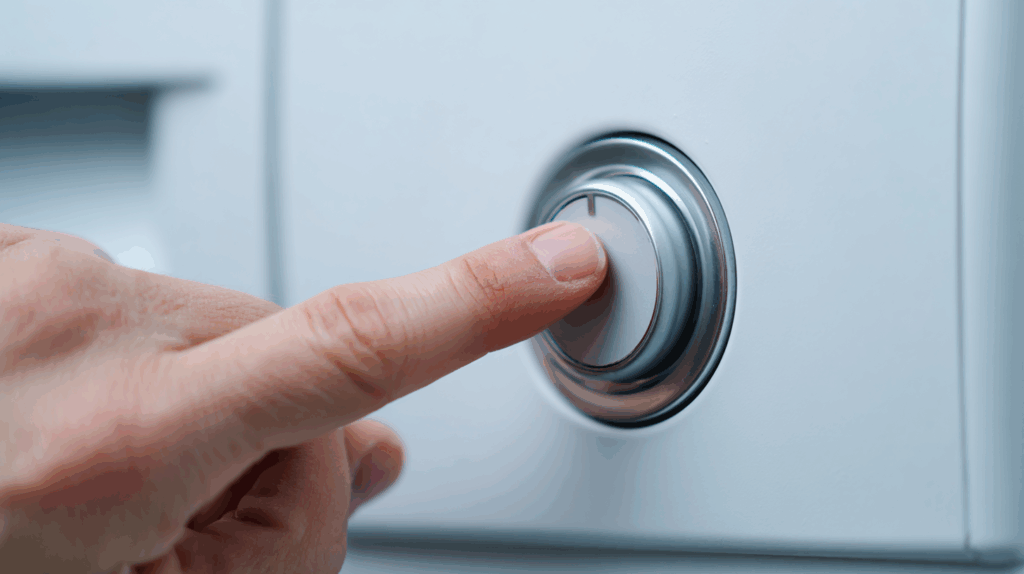
In most emergencies, the safest action is to shut down your property’s electrical system at the main switch. This stops the flow of electricity and prevents further hazards.
How to safely turn off the power:
- Locate your main consumer unit (fuse box).
- Identify the main switch—this is often a large red switch marked “MAIN.”
- Flip the main switch to the “off” position.
- If the breaker is wet, damaged, or sparking, do not touch it—call emergency services instead.
Why is this critical?
- Prevents further electric shock risks.
- Reduces the chance of electrical fires spreading.
- Stops damaged circuits from drawing power.
If your building’s electrical design makes accessing the main switch difficult, you may want to consider upgrading your system for better safety and accessibility. Learn how thoughtful electrical design services can make emergency responses safer and more efficient.
2.3 Avoid Water or Damp Areas During Electrical Faults
Water is a strong conductor of electricity, making damp areas extremely hazardous during an electrical fault.
Why it’s dangerous:
- Wet floors or walls can carry live current.
- Electrical shocks in water are often fatal.
Precautions to take:
- Stay away from flooded rooms, leaking appliances, or damp basements during an electrical emergency.
- Do not attempt to unplug devices or flip switches if standing in water.
- Keep children and pets far from the affected areas.
- Wait for professionals to assess the situation before re-entering wet zones.
2.4 Use a Fire Extinguisher Designed for Electrical Fires

If a small electrical fire occurs, the wrong type of extinguisher can make the situation worse. Only use fire extinguishers that are safe for electrical fires.
Recommended extinguishers:
- Class C fire extinguishers
- CO2 (carbon dioxide) extinguishers
Never use:
- Water-based extinguishers—they conduct electricity and can cause severe shock.
- Foam extinguishers unless clearly marked safe for electrical use.
Steps to use an extinguisher:
- Stand at a safe distance.
- Aim at the base of the flames, not the device itself.
- Sweep side to side until the fire is out.
If the fire grows beyond your control, evacuate immediately and call 999.
2.5 Call Emergency Services if Fire or Injury Occurs
Some electrical faults can quickly escalate into life-threatening situations. Don’t hesitate to call 999 if there is a visible fire, serious injury, or a risk to life.
Call 999 immediately if:
- Flames are visible or spreading.
- Someone has suffered a severe electric shock or burn.
- The property is filling with smoke.
- You are unsure whether it is safe to stay inside.
What to do while waiting for responders:
- Stay calm and speak clearly when calling 999.
- Leave the building if it is safe to do so.
- Keep access routes clear for firefighters and paramedics.
- Do not re-enter the property until it has been declared safe.
Section 3: How to Minimize Damage Before Help Arrives
In an electrical emergency, fast but careful action can reduce the risk of serious damage or injury. While it’s essential to wait for a qualified electrician to carry out repairs, you can take simple, safe steps to protect your property and those inside.
3.1 Disconnect Appliances Safely
If you notice sparks, smoke, or unusual buzzing from an appliance, unplug it immediately only if it’s safe. This can prevent further electrical faults or the spread of fire.
Steps for safe disconnection:
- Switch off the appliance first, if possible.
- Gently unplug the device from the socket without touching exposed wires.
- If the plug or socket is hot, smoking, or sparking, leave it alone and switch off the power at the main breaker instead.
Do not try to repair or restart faulty appliances before they are checked by a professional. Removing the power source reduces the chance of further electrical damage or overheating.
3.2 Inform Others in the Building
During an emergency, communication is key to preventing accidents. Quickly warn everyone in your household, workplace, or building to stay clear of the affected area.
What to do:
- Tell family members, employees, or neighbours not to use any outlets or appliances linked to the fault.
- If you’re in a commercial space, follow your company’s emergency plan to ensure staff and visitors are safely evacuated or kept away from danger zones.
- Ensure children and pets are moved to a safe location.
Clear communication helps prevent others from accidentally turning devices back on or entering hazardous areas.
3.3 Ventilate the Area
If you smell burning plastic or notice smoke, it’s important to ventilate the area to reduce the risk of inhaling toxic fumes.
How to ventilate safely:
- Open windows and doors near the affected area.
- Use fans to help remove smoke, but only if it’s safe to use them and they’re on an unaffected circuit.
- Avoid standing close to the source of the smoke.
While ventilation helps clear the air, remember that prevention is the best safety measure. Installing a reliable smoke detection and fire alarm system can alert you to electrical fires early, giving you more time to act and reducing your reliance on manual checks during an emergency.
3.4 Avoid Using Extension Cords or Temporary Fixes
In the face of an electrical fault, it might be tempting to plug appliances into extension cords or bypass a faulty outlet. However, these makeshift solutions can make things worse.
Why you should avoid temporary fixes:
- Extension cords are not designed for long-term use and can overheat if overloaded.
- DIY repairs or “quick fixes” often ignore the root cause of the problem, increasing the risk of fire or further electrical damage.
- Bypassing a faulty outlet can lead to short circuits in other areas of your electrical system.
The safest approach is to leave the faulty system untouched until an electrician can diagnose and repair the issue correctly.
Section 4: Preparing for the Electrician’s Arrival
While waiting for professional help, taking a few simple steps can help your electrician diagnose and fix the problem more efficiently. Proper preparation ensures safety, speeds up the repair process, and can even help identify underlying issues more effectively.
4.1 Note Down Fault Symptoms and Timeline
When the electrician arrives, they’ll ask you for details about what happened. Having clear, accurate information makes it easier to locate the fault and provide the right solution.
Be ready to share:
- When the issue started: Write down the time and date when you first noticed the problem.
- What symptoms occurred: Sparks, burning smells, flickering lights, or tripped breakers.
- How often does it happen: Was it a one-time event, or has it happened multiple times?
- What appliances were in use: Noting which devices were running at the time can help pinpoint the cause.
- Any actions you took: Switching off the breaker, unplugging devices, or ventilating the area.
These details give your electrician a head start in diagnosing the problem and reduce the time spent troubleshooting.
4.2 Clear Access to Electrical Panel and Faulty Areas
An electrician will need quick, safe access to your consumer unit (fuse board), outlets, appliances, and any areas where faults have occurred.
Prepare the space by:
- Moving furniture or clutter away from the electrical panel and sockets.
- Ensure the area is dry and well-lit.
- Keeping pets and small children away from work areas for their safety.
- Providing a clear path through your property to the affected rooms.
A tidy workspace not only helps the electrician work efficiently but also reduces the risk of injury or further damage.
4.3 Have Relevant Documentation Ready
If your property has undergone electrical work in the past, provide any available documents to help the electrician understand your system.
Helpful documents include:
- Electrical inspection reports or NICEIC certificates confirming previous work was compliant (learn more about NICEIC certification here).
- Warranty details for appliances or installations are still under guarantee.
- Records of past repairs, installations, or upgrades, especially if the same fault has happened before.
Proper documentation makes it easier for your electrician to assess your system’s history and ensure compliance with UK safety standards.
Section 5: Preventing Future Electrical Emergencies
Preventative maintenance and smart safety practices can greatly reduce the risk of future electrical faults. Here’s how to keep your property safe for the long term.
5.1 Schedule Regular Electrical Inspections
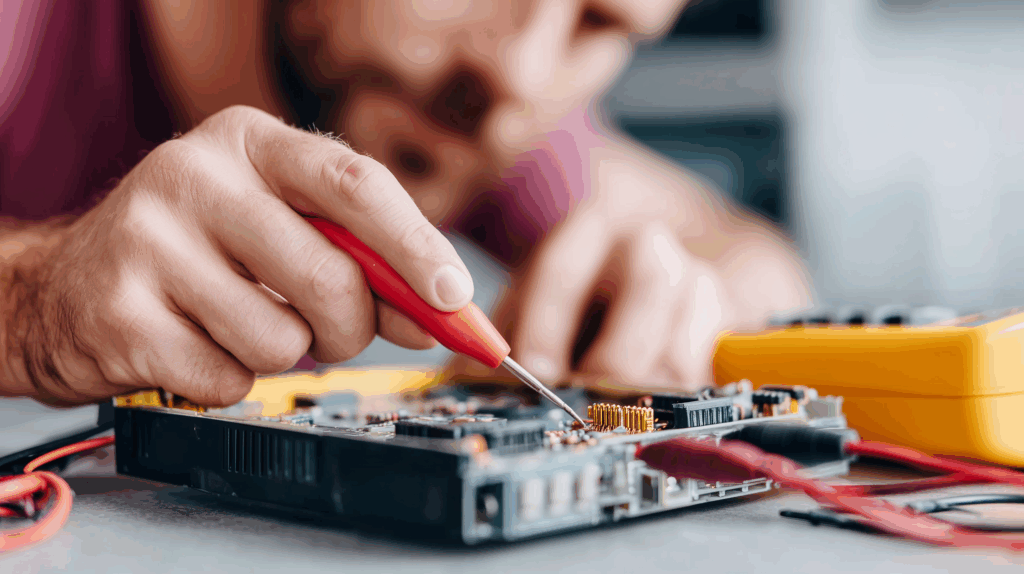
Routine inspections are one of the most effective ways to catch faults before they become dangerous.
Benefits of professional inspections:
- Identify deteriorating wiring, overloaded circuits, and faulty components early.
- Ensure your electrical installation meets the latest safety codes.
- Gain peace of mind knowing your home or business is safe.
Certified electricians can issue a NICEIC Electrical Certificate, proving your system has passed a safety inspection. For more information on compliance and inspections, visit the NICEIC Certificate service page.
5.2 Upgrade Old Wiring and Fuse Boards
Outdated electrical systems are more prone to faults, overheating, and fire hazards. If your property has an old fuse board or aging wiring, it’s time to upgrade.
Signs your wiring needs updating:
- Frequent circuit breaker trips.
- Flickering lights or discoloured outlets.
- Fuse boards with ceramic fuses or no RCD protection.
Modern fuse boards with Residual Current Devices (RCDs) cut off power instantly in dangerous situations, improving your property’s safety. Explore your options for fuse board replacement in Liverpool.
5.3 Use Certified Appliances and Proper Installation
Low-cost or counterfeit electrical products often fail safety tests and can cause fires or electric shocks.
Tips to stay safe:
- Buy appliances from reputable retailers.
- Look for safety marks such as CE or UKCA.
- Have appliances installed by a qualified electrician instead of attempting DIY wiring.
Quality products and professional installation ensure your appliances are safe to use.
5.4 Educate Household or Staff About Electrical Safety
Everyone should understand basic electrical safety practices to help prevent accidents.
Key safety rules:
- Don’t overload power sockets or use multiple extension leads.
- Turn off appliances when not in use.
- Never attempt to repair electrical faults without proper training.
- Keep water away from outlets and cords.
Training staff in commercial environments can reduce workplace accidents and downtime from electrical faults.
5.5 Install Smoke Alarms and Electrical Safety Devices
Early detection and fast shutdown of faults save lives.
Recommended safety installations:
- Smoke detectors alert you to electrical fires in their early stages.
- RCDs (Residual Current Devices) are used to protect against electric shocks and circuit overloads.
- Surge protectors safeguard electronics from sudden power spikes.
Professional electricians can install and maintain smoke detection and fire alarm systems tailored to your property’s needs.
Need an Emergency Electrician in Liverpool? Contact a Trusted Local Expert Today
If you’re facing an electrical emergency in Liverpool, don’t delay—get professional help fast. Whether it’s a sudden power outage, burning smells, sparks, or a tripped circuit breaker, a qualified electrician can protect your home or business from serious harm. At Maxim Electrical Contractors, we provide 24/7 emergency electrical services alongside a full range of residential and commercial solutions, including home rewiring, EV charger installations, fire alarm systems, and fuse board upgrades.
Our NICEIC-certified team is trusted across Liverpool and the North West for safe, efficient, and reliable service. Contact us today at 0151 792 3243 or visit Maxim Electrical Contractors to book a call-out or request a free quote. Your safety is our priority.